Southwest Louisiana Genealogy for Family At Louisiana
  • Family At Louisiana
  • Blogs
  • Bergeron Families (2)
    • Bergeron, Jean
    • Bergeron, Celestin Pierre
  • Philippe FONTENOT
  • George MILLER Family
  • Jacob MILLER Family
    • Table of Contents - Jacob Family Books >
      • Index - Jacob Miller Family 2018 >
        • Table of Contents - Jacob Miller Photos
  • Jacob MILLER, Jr.
    • Jacob, Jr. -Table of Contents >
      • Jacob, Jr. - Index
  • Jean MILLER Family
    • Table of Contents
  • Antoine MILLER
    • Table of Contents
  • Frederic MILLER Family
  • Jean Baptiste Gus Miller Family (Hardbound with photos)
    • Gus Miller - Table of Contents
  • Jean Baptiste Gus Miller Family (Softbound book without photos)
    • Gus Miller (Softbound) Table of Contents
  • Jean Louis Miller
    • Jean Louis Miller Book Photos
  • Michel Miller & Hiacinthe Lejeune Family
    • Book Details >
      • Table of Contents
      • Index of Names in the book
  • Joseph Ozincoutt Miller
  • Pierre Valcour Miller
    • P. V. Miller - Table of Contents >
      • P.V. Miller - Index
  • Chachere Family
    • Chachere Table of Contents & Index
  • Loranzo (Laurent) Sturlese & Pierre (Larche) Achee
    • Index (Martel)
    • Sturlese & Ache - Table of Contents >
      • Sturlese & Ache - Index
  • Martel Family
    • Index (Martel)
  • McCauley Family
  • Ortego Family
    • Table of Contents (Ortego)
  • George E. Pettifield
  • Pierotti - Pierrottie Family
    • Constantino Pierotti Video
    • Pierotti-,Pierrottie Video
  • Albert A Pierotti Family
  • Balthazar Pierotti Family
    • Index (Balthazar Pierotti)
  • Jean B. P. L. Vidrine, Sr.
  • Printed Articles & Other
    • A Cajun is not a "Coonass"
    • Baccigalopi, "Family has Italian Heritage"
    • Bonsall Family
    • Bonsall 300th Reunion
    • Broussard Family
    • Cameron Parish Beautiful Teachers
    • Diggin Up Miller Roots
    • Fur & Wildlife Festival 2013
    • Inquest Concerning George Stelly
    • Lindsey Veillon & Gladys Miller
    • Sanner Family
    • Savoies of Cameron Parish
  • FindAGrave.com
    • Your Family Book
  • Family Research Resources
  • Forum; Let's talk
  • Contact Information
  • Photos
    • BHS 1962 & '63 Class Reunion in Summer 1993
    • Merry Christmas
    • Rhonda Means Medieval Dinner
    • Bohannon Sunday School Fellowship, November 21, 2014
    • Elvis Last Seen - 10/31/1994
    • Brandon High School Lunch Presentation, May 22, 2014
    • Chataignier
    • Pierotti/Pierrottie >
      • Pierrottie Photo Book
  • Family Videos
    • Mardi Gras - Tee Mamou/Iota Training
    • Harley
    • Fishing Trip, Pensacola, FL, May 2015
  • Karen Ileta Art
  • BHS 2017 Reunion
  • Music from Louisiana
  • Bateman Family of Canada
  • Holland Family of Canada
  • Temp

Schooner E. O. Gladys & Riverboat Winona by Patrick Achee

9/23/2019

0 Comments

 
Picture
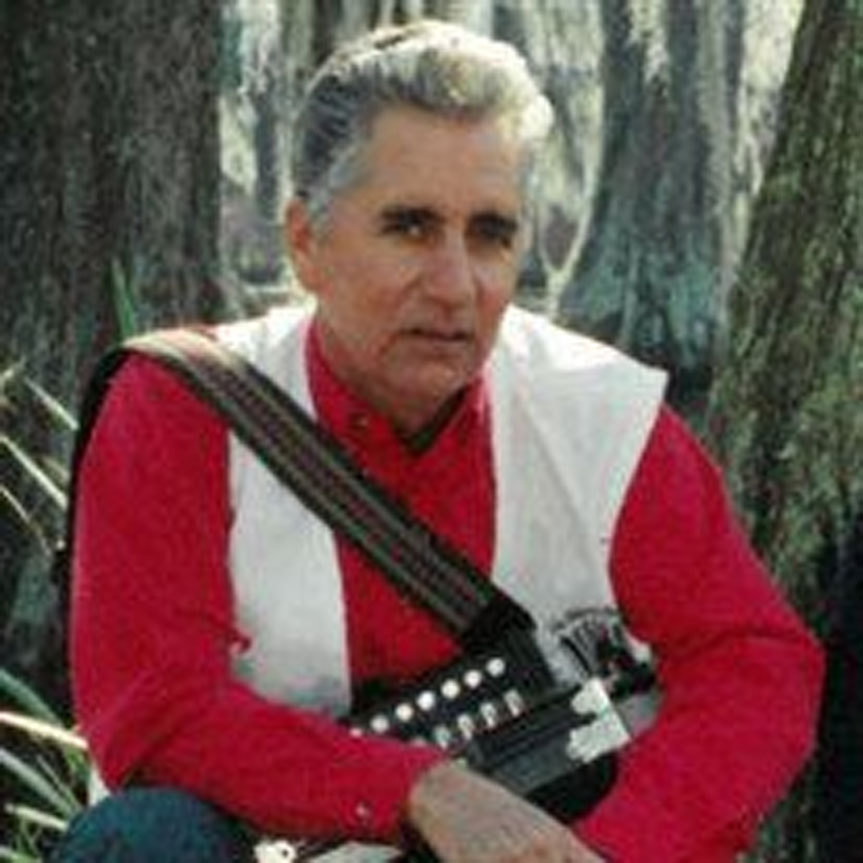
Joseph Nunez Miller (Patrick Achee photo)

Joseph Nunez Miller was a seaman.  He piloted a schooner around the turn of the century, in the early 1900’s..  Then he piloted a river boat the "Winona" from about 1911 to 1942.  His wife Edna also had a river boat license and served with him on trips to New Orleans, Baton Rouge, Lake Charles, Lake Arthur and other stops.  He served in the Coast Guard at Grand Chenier during WW II.  J. N. Miller and his wife, along with Emma Nunez Miller, mother, and Oma Miller, sister, survived Hurricane Audry in Grand Chenier, LA., on June 27, 1957.  They huddled in the upstairs of the old home place of Alcide Miller.   They then moved to Lafayette, LA.


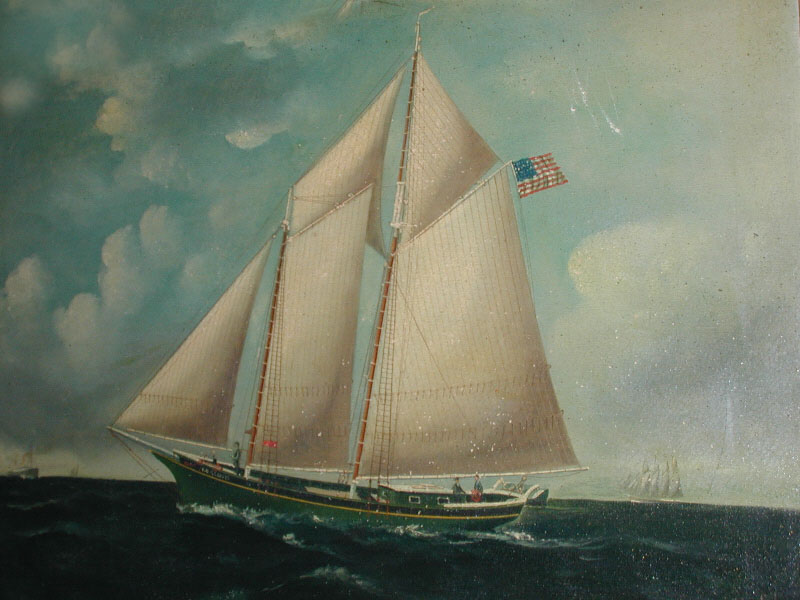
​Schooner E. O. Gladys
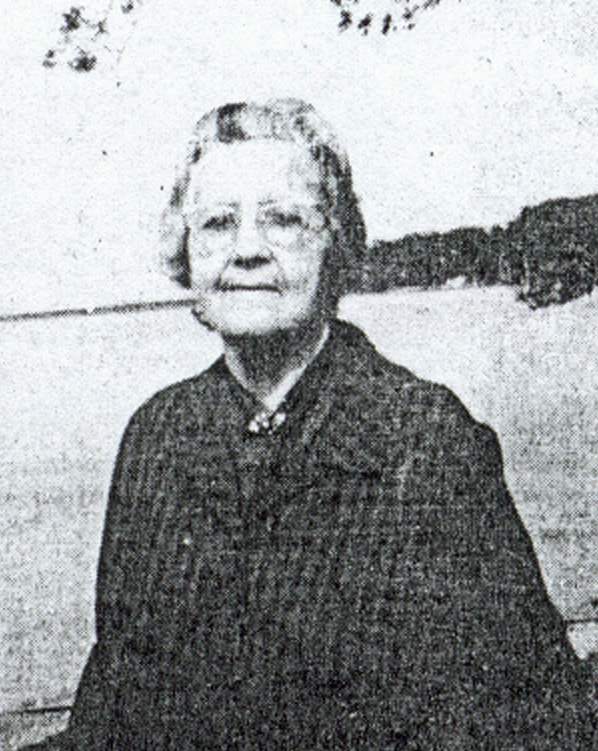
The schooner E. O. Gladys was named after Papa's Mother and his two sisters.(Emma, Olive and Gladys).  I really don't remember when Papa got the schooner.  I believe he had gotten it before he and mama were married.  Charlie Nelson took Papa on Capt. Nelson's schooner to Galveston to get the schooner.
Picture
Edna Theriot (Oma McCall photo)
​The first thing I remember about the schooner was we could tell when he was getting close to home.  His old dog, Rover, would begin barking and Mama would say, "Papa's coming."  Going outside at the old homeplace, we could see the masts of the schooner.  It appeared to be around Lower Mud Lake.  In those days there were not many trees & plenty of farming.
Picture
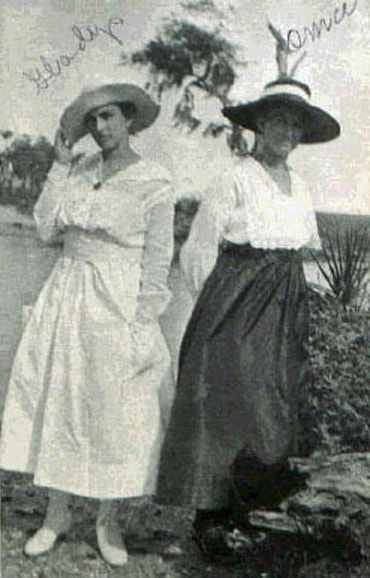
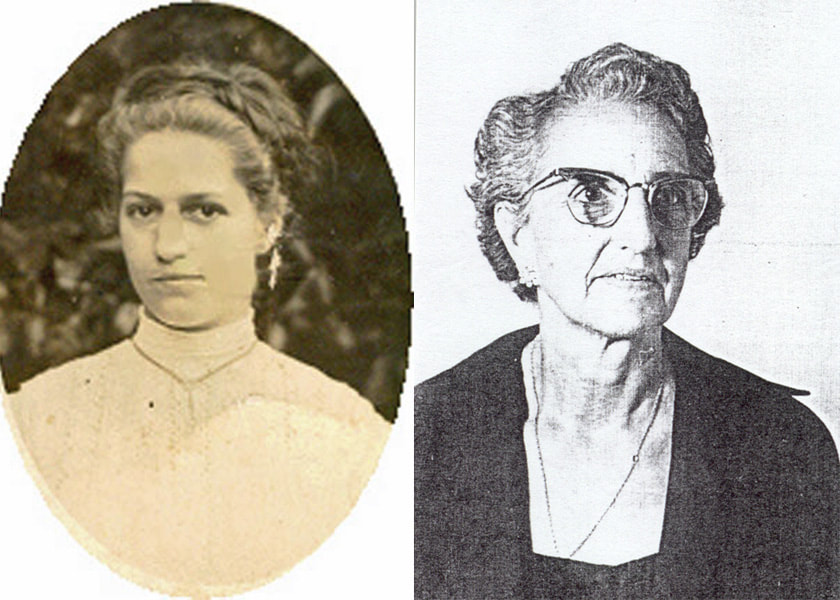
Olive & Gladys Miller
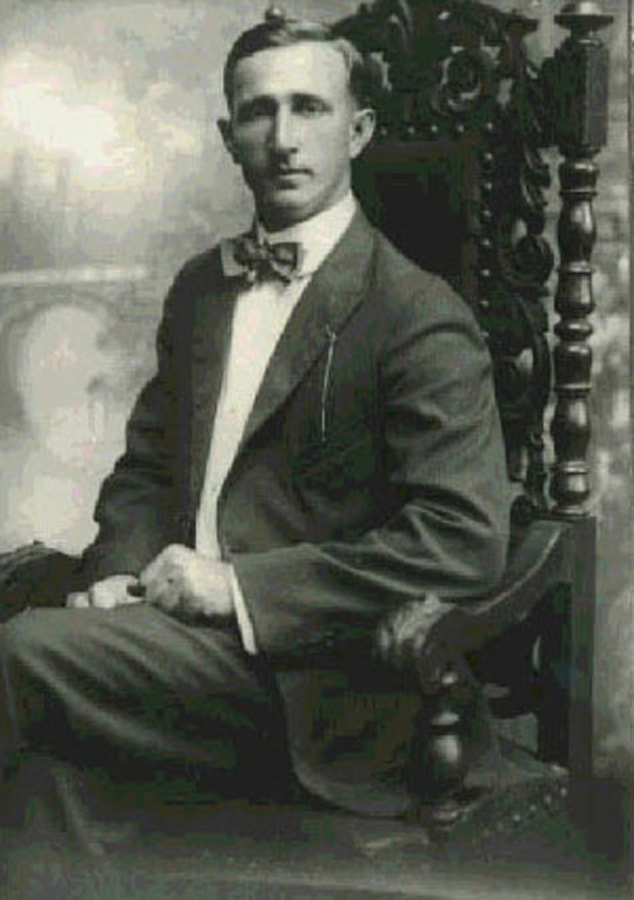
​The only mate I knew that worked for Papa on the schooner was Jack Mongue.  I remember going on a trip on the schooner with Papa, Mama, and Raphiel Miller.  When we got in the Gulf, Mama and I stayed in the hold until we reached Galveston.  Most of Papa's trips were to Galveston.  On one of Papa's trips to Galveston he lost his rudder and had to steer by letting out a long heavy rope.
 
Years later on a trip to New Orleans on the Winona, Mama showed me the place where the schooner came to rest in a bayou (seems like it might be Schooner Bayou).  Joe said he thought it was common to junk old boats in remote areas like that.
Picture
Raphiel Miller, abt. 1918 (Oma McCall photo)
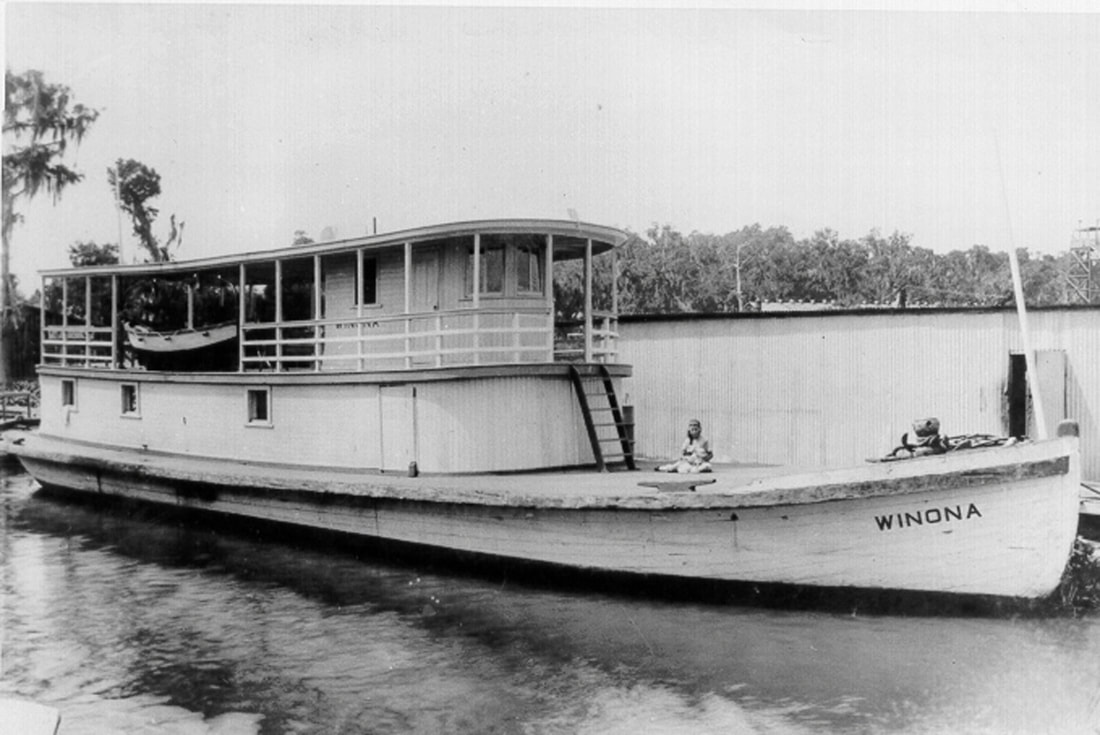
PictureRiverboat Winona (Patrick Achee photo)
Riverboat  Winona
The Winona was built on the Mermentau River in Papa's yard by Mr. Waterman.  A boat builder from some south Louisiana city, I believe it was Franklin.  It took 1 year to build.  It was built parallel to the river and it was launched into the river sideways.  I saw it being launched and was frightened it made such a big splash.  I was seven when it was finished, 1917.
 
The original engines were gasoline, but in the summer of 1922, Papa took the boat to Lake Arthur at Lezay Roy's wharf and changed the engines out.  He replaced them with two, 30 horsepower, 2 cylinder, Callenburg diesel motors.  I was out of school at that time and stayed on the boat with Papa and Mama.  I slept on deck under a mosquito netting, while Papa and Mama slept in the cabin.
 
Papa first worked between New Orleans and Grand Chenier; and hauled cotton and cotton seed.  Bales on deck and seed in the hold. I went on several trips to N.O. on the Winona.  Papa took different routes.  You or John would know the routes better than me.  Sometimes it was in the Gulf to Vermilion Bay, then though bayous to Bayou Black and on to the Mississippi River near  New Orleans.  Other trips were into Bayou Plaquimine into the Mississippi near Baton Rouge.
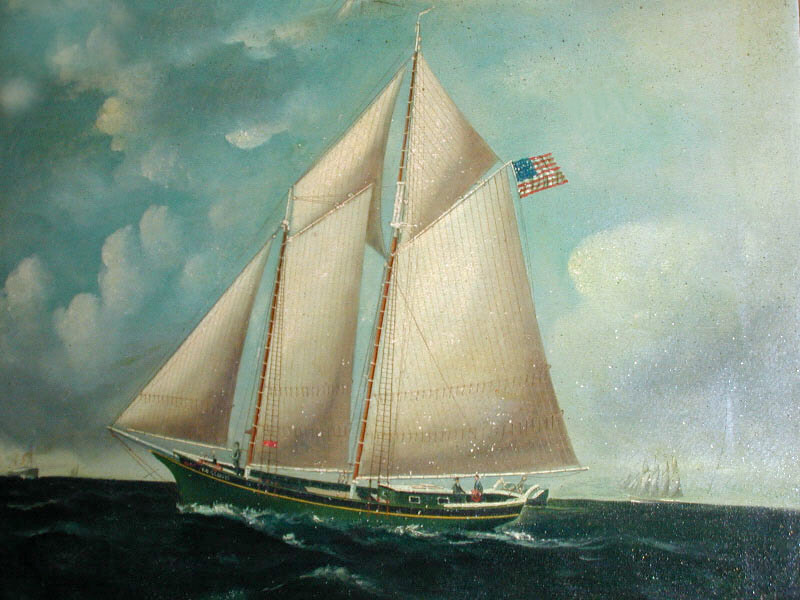

PictureSchooner E. O. Gladys (Patrick Achee photo)
​Later (1920 - 1925) Papa made passenger and freight trips to Lake Arthur.  Some of the freight were cars, lumber, caskets, whatever people needed.
 
Between 1925 - 1929, he worked between Lake Charles and Grand Chenier. Freight only.  After that he brought oil and gasoline from Port Arthur to Grand Chenier, until about 1940.  He left the Winona tied up in the pasture until 1943 when Adam Nunez bought it.  Adam make a tug-boat out of the Winona.  It finally sank in the Gulf off the coast of Galveston. 

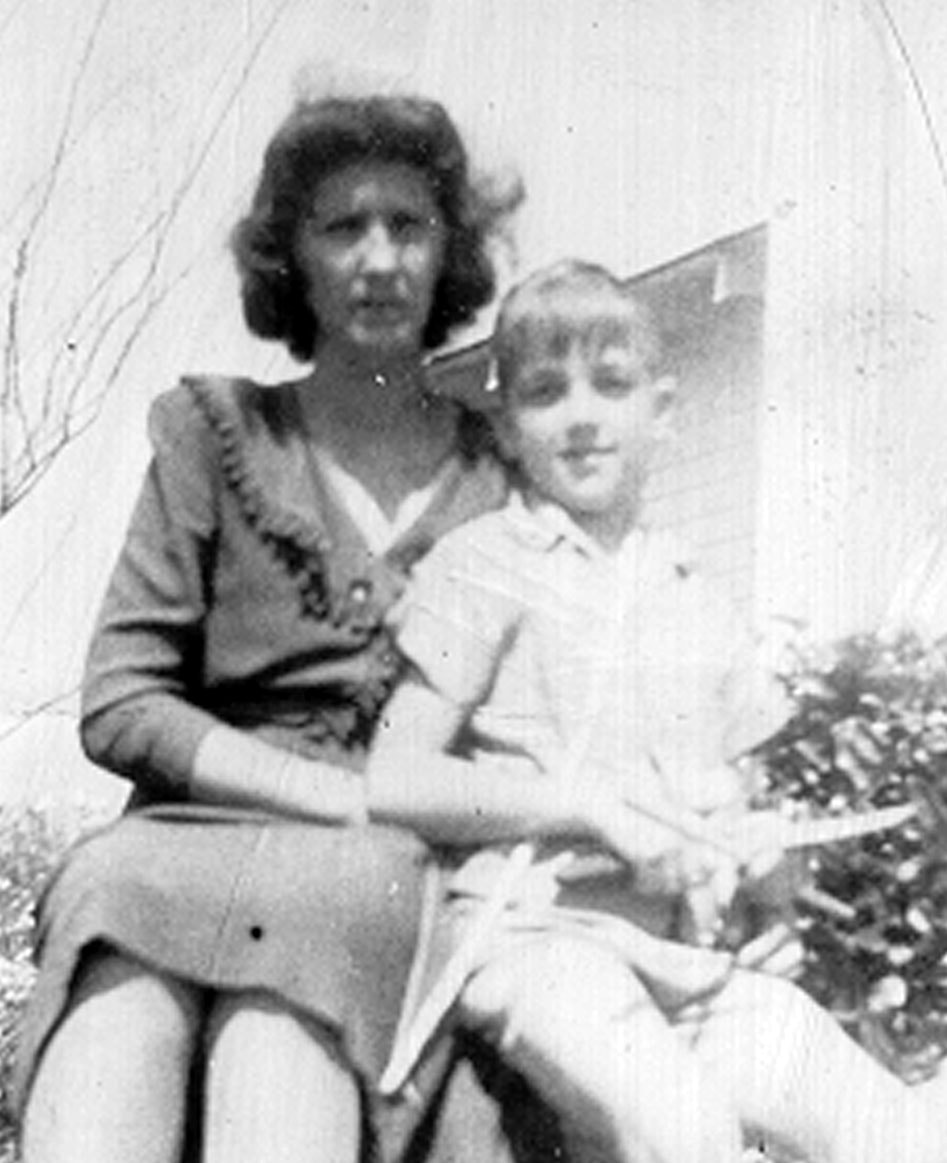
Winona Miller Achee is the daughter of Joseph Nunez Miller and Edna Theriot.  Patrick is Winona’s son.


Picture
Winona Miller with son Patrick Achee. 1941
Patrick Achee is the 3rd great grandson of Michel Miller and Hiacinthe Lejeune. The family book for the Michel Miller and Hiacinthe Lejeune Family can be purchased here.

See another article on this family here. 

DOWNLOAD YOUR COPY
millerjoseph_schooner_riverboat.pdf
File Size: 571 kb
File Type: pdf
Download File

0 Comments

Sonnier Family Heritage Rich On Many Fronts

8/25/2019

29 Comments

 
BY: NOLA MAE ROSS, American Press 01/19/1992

    Louis and Louise Sonnier's lives were torn asunder. They lived in Nova Scotia for more than eight decades close enough to sniff the salty air from the Atlantic Ocean and close enough to see the schooners that eventually took their family on a painful journey.
    The Sonnier's and their Acadian neighbors should have been used to having their homeland tossed back and forth between Britain and France. There were years of looking over their shoulders to see who was gaining on them. but they never dreamed their lives could be so torn as by what was to happen.
    ''Pledge allegiance to our queen,'' threatened the Britons, current masters of this land called Acadie (French) or Nova Scotia (English), ''or we'll put you completely off this island.'' Up until then, the threat was never enforced but that all changed on Sept. 5, 1755, when the English posted an order for all Acadian males over the age of 10 to meet at the Grand Pre Church.
    Among those gathering at the church were Marcell Sonnier, son of the patriarch Louis, as well as his grandsons Charles, Pierre and Rene Sonnier.
    The men were kept waiting and waiting for a decision. Finally, on Oct. 7, they were marched from the church to the harbor, where they were put onto different boats. Then the women and children were gathered onto ships, separating families wherever possible separating betrothed lovers, husbands from wives and mothers from screaming children on
their way to becoming ''orphans.''
    It became known as ''The Expulsion of the Acadians ''the blackest day in Acadian history. As the boats pulled away from shore, the Acadians saw their homes torched. They watched helplessly as the flames seem to reach the sky, burning like their broken hearts.
    Only the boat captains knew where they were going. History says that some went to England, some to France and some to the northeast coast of America.
    The Sonnier's and their neighbors had nothing left nothing but a strong faith in a better life and in freedom from these tyrants, plus the great strength from their Acadian heritage. Many never saw their kin again. And many, like the Sonnier's, have gaping holes in their family histories where whole generations dropped through.
    Most of these Acadians had a vision of Louisiana. They knew Louisiana to be a French province where they could be free. So hundreds of these homeless people started slowly for Louisiana. These journeys continued from 1755 to 1785. Some of the Acadians arrived in Louisiana within 10 years of the expulsion, others never arrived. But those who did reach Louisiana were shocked to find that the land now belonged to Spain. Nevertheless, they stayed, and were treated well by the Spaniards. The Sonnier's slowly moved across Louisiana, some settling in St. James Parish, some in Attakapas country on the Teche St. Martinville and others to the Opelousas Post.
    Sylvain Sonnier I, a grandson of the Nova Scotia patriarch, and his wife, Magdaliene Bourq, settled south of Opelousas at Bellvue. He also had a vacherie, or ranch, in a cove on Plaquemine Brulee, a Spanish land grant. He was also a member of the Opelousas Militia. Still other Sonnier's kept going west to the far end of Louisiana, as evidenced by a number of Sonnier's in the Vinton area.
    Sylvain Sonnier II, who first wed Humilda Como and then Judith Bello, daughter of Donato Bello, is the ancestor of nearly all the Sonnier's in Allen, Jeff Davis and Calcasieu parishes. Two of his sons Belile (Belisle), who married Eloise LaCase, and Donato (Donat) Sonnier, who married Melite Casanova moved to Imperial Calcasieu in the section that is now Allen Parish. At that time, the area was known as Prairie Soileau and included today's town of Oberlin. Today there is a Soileau community between Oberlin and Elton.
    Three cemeteries in that area have many departed Sonnier's one northeast of Oberlin named Durio, a Sonnier cemetery on land donated by Donat Sonnier in Soileau and one named Pine Chapel north of the Guy community.
    Sonnier's were mostly farmers and cattlemen in the early days. The original Louis Sonnier in Nova Scotia was also a soldier as was Sylvain I, the first Louisiana Sonnier, who served in the Opelousas Militia.
    During the Civil War, the names Sonnier, Sonier, Saulnier and Saunyer were on the Confederate Army rolls. From Allen Parish were two brothers Charles Sonnier, who was killed during the war, and William Belile, a private in Company B, 16th La. Infantry Battalion, which later became the Confederate Guard Response Battalion.
    After the war, William Belile married Clementine Mouille and raised a large family in the Prairie Soileau area. Most of his descendants continue to live in that area today. One was Lucien ''Tom'' Sonnier, whose nickname came from an Indian who followed around as a child. Tom first married Louise Castello, then Celina Guillory. He fathered 16 children.
    One of those children was Joe Sonnier, a well-known resident in Kinder. He served on the City Council for many years and operated a filling station.
    One of his daughters was Mrs. Charles (Betty) Sarver, who is president of Allen Parish Genealogy and Historical Society.
    ''During World War II he was often called upon to help those in desperate need of rationed tires and gasoline,'' she recalled. ''One  time a minister and his wife had a tire blowout on their trailer home. There were no tires to be had, not even old used ones. ''My father noted that the size of their tire looked the same as an airplane tire he had seen, discarded at the Lake Charles Air Force Base. He obtained permission to get several for that family.'' Among other descendants of Sylvain Sonnier who live, or have lived, in Kinder and Oberlin, are Ronnie, son of McKinley Sonnier, who operates the Sonnier farms; Woodrow, Delmer, Brenda Sonnier Byrd; Fred, James, Simon, Mrs. Tom (Lucille) Patrick; Mrs. Martin (Celestine) Storery; Roy and Amie Sonnier and their great-granddaughter, Kim Manuel; Ida Sonnier Rider; Pearl Sonnier Taylor; the late Jack Sonnier; and many more.
    Don Louis Sonnier, another son of Sylvain, has descendants in the Lake Charles area, including the late Sam Sonnier, Lake Charles electrical contractor for many years; Mrs. Jacques (Sally) Sonnier Hand and Perry Sonnier, both of the Bundicks community; and Johnny Sonnier of Hemphill.
    In Sulphur, Clay Sonnier was a barber, while his son Ruel was the postmaster there for many years. Another son who lives in Lake Charles is Col. James Sonnier, retired after 27 years in the air force. His sister, Ruth Sonnier Romero, lives in Kaplan.
    In Fenton was Louis Sonnier. According to his son, Verlin Sonnier of Lake Charles, ''My father drove a school bus to Fenton High School for 36 years and he also ran a small country store. Today my mother, Mrs. Leanise Fontenot Sonnier, lives near my sister, Mrs. L.L. (Vida) Whitaker, in Edna, between Kinder and Fenton. My brother, Joe Sonnier, lives in Topsy.''
    The name Sonnier has long been familiar in the music world, as Eddie Shuler, Lake Charles musician and owner of a recording studio, attests. Shuler, who once recorded Dolly Parton in her songs ''Puppy Love'' and ''Girl Left Alone,'' also worked with Jo-El Sonnier during the first six years of Sonnier's career.
    Jo-El Sonnier is now widely known for his hit songs ''No More One More  Time,'' ''Raining In My Heart,'' ''Come On Joe'' and ''Tear Stained  Letter.'' The Cajun-country singer is currently in Nashville, Tenn., recording for Capitol Records.
The late Danny James Sonnier, a Lake Charles musician known professionally as Danny James, recorded many songs with Shuler. ''He could make that guitar sing,'' Shuler recalled. Two of Danny James' more popular records were ''Boogie In The Mud,'' written by Rockin' Sidney of Lake Charles, and ''Paper In My Shoe'' by BooZoo Chavis, also of Lake Charles.
    Giles Sonnier, a nephew of Danny James, is now working as a guitarist.  He plays with a style much like his uncle's. Howard Sonnier of Lake Charles plays the guitar as well as a fiddle and French harp, and currently plays Cypress Creek Bank. He has also cut a record and written several songs.
    In Church Point there's Johnny Sonnier, who is rapidly climbing to the big time with his recordings of ''The Devil Went To New Iberia'' and ''Chere Alice.'' In 1934, Lennis Sonnier joined the famous Hackberry Ramblers. He wrote
the original ''Jolie Blonde,'' which became one of the group's most requested songs.
    Lennis is still interested in music, despite a stroke that made it hard for him to play the guitar. He's now hunting for a fiddle, which he thinks will be easier to handle. He has seven sons, stepsons and close relatives who are musicians
mostly drummers.
    The art world has also profited from the Sonnier family. In Scott, Floyd Sonnier operates his Beau Cajun Art Studio. The 58-year-old artist works in pen and ink to preserve his Acadian heritage through authentic sketches of Cajun life.
    ''I can't remember ever not being an artist,'' he said. ''My parents would say I started drawing when I was 3.''I remember well in school in Church Point. I was the only artist in my class. In fact, I was the only artist in the school. Every Christmas I was called on to go around the classrooms and draw Christmas scenes on the blackboards.''
    Floyd's goal of preserving Acadian history through has led to considerable research and to becoming an adviser for the television documentary ''Halfway Home,'' which chronicled the Acadian Expulsion. ''It was when working on this that I suddenly realized that although I knew my own Cajun background, none of my school books mentioned the Acadians, much less the Expulsion and the flight from Acadie, and we certainly did not have to read the poem 'Evangeline,''' Sonnier said.
He had acquired his knowledge of the Acadians from family stories handed down from generation to generation for nearly 250 years. Although the Acadian Expulsion was long ago and today's Sonnier's did not live through that dark beginning and the tortuous trail of tears to a better life, they still cherish the strength and spirit of their forebears as well as the surprising number of Acadian customs still present in their daily lives.
29 Comments

Terry James Clement, 1934-2019

7/15/2019

0 Comments

 
PictureTerry James Clement
​     Terry James Clément passed away July 5th in his residence. Terry was born May 5th, 1934 the 6th of 9 children for Laurent and Ada Clément. A Mass of Christian Burial for Terry James Clement, 85 of Evangeline, LA will be held at St. Joseph's Catholic Church in Evangeline, LA on Monday, July 8, 2019 at 11:30 AM with Father Paul LaFleur officiating. Burial will follow St. Joseph Cemetery. A gathering of family and friends will be held Matthews & Son Funeral Home in Jennings, LA on Monday, July 8, 2019 from 9:00 AM with a Rosary recited at 10:00 AM and continuing until his Christian Mass at 11:30 AM.
     Terry fell in love with French Music at a very early age and in 1949 formed his first band, Terry Clément and his Rhythmic Five with brother Purvis and brother-in-law Ronnie Goodreau. He would go on to form the Tune Tones and finally; when younger brother Grant was old enough to join, he formed The Clément Brothers band. 
In 1952 Terry and Purvis were riding in a pickup truck to a show in Holly Beach when they decided they were going to make a record, the two of them played around with some catchy tunes and lyrics and the following week "Diggy Liggy Lo" was recorded in Crowley. They continued to play music around the country and in 1993 they were inducted into the Louisiana Hall of Fame and presented the "Prix De Pionnier" award in 2002 by the Cajun French Music Association.
     Terry received a Bachelor of Science degree in Agriculture from LSU in 1957 and was an avid LSU fan. You could often spot him on a Saturday Night at LSU stadium proudly wearing his custom-made Tiger "Fur" sport coat cheering on his "Little" Tigers.
----------------------------------------------------------------------
[Rainy Day People, the song by Terry Clement]
​----------------------------------------------------------------------


​Terry retired from the United States Department of Agriculture in 1989 after 32 years of service as a Soil Conservationist, often traveling to foreign countries to assist in developing their agricultural programs. He was recognized by the USDA for his outstanding performance above and beyond his assigned duties with a Meritorious Service Award in 1977.
     Terry was an avid horticulturist and enjoyed tending to his garden and many fruit trees. He also spent many hours in his wood shop creating a variety of wooden toys and furniture for friends and family.
      Left to cherish his memories are: son Jules Clay (Sharon); daughters Anissa (Larry), Lisa Mullett (Matt) and Angela LeJeune (Kyle); brother Grant (Diane) and sister Carita Goodreau (Ronnie); grandchildren Bradley, Abby, Jack, Madison, and Bennet; plus, a multitude of nieces and nephews. 
     Terry is preceded in death by his parents Laurent and Ada; sisters Audrey, Melba, Thelma (Tilly), and Cecile; brothers Hubert Sr., and Purvis.

Terry James Clement's great great grandmother is Eudalie Miller, b. 1835, who married Ursin Doucet, 1831-1862. Eudalie Miller is a descendant of Frederic Miller and all the family history, except for recent updates, is included in the Frederic Miller Louisiana Family book.
0 Comments

Normandy Invasion, D-Day Military Service

6/6/2019

0 Comments

 
In honor of the  men who paid the ultimate price for our freedom, and those who served to make it a successful undertaking to free the oppressed, I salute these men from the greatest generation who placed freedom for all above their freedom. 

While there are many military service personnel that I am unaware of, these are the ones that I know of from my research of Southwest Louisiana families.

Doxey, James Andrew "Sonny Boy". (Grand Chenier). He was killed in action during the Normandy invasion. He is the son of James U. Doxey and Matilda Sturlese and the grandson of Lucien Sturlese and Phelonia Miller. Phelonia is the grand daughter of Michel Miller and Hiacinthe Lejeune.
Buried: https://www.findagrave.com/memorial/43726758/james-a_-doxey
 
Ricard, Henry. T Sgt. US Army. Killed in action while serving as Flight Engr. on a B-24. He was shot down on June 18, 1944 while delivering supplies to the French underground. He is buried in Brittany American Cemetery and Memorial, Saint-James, Normandy, France. He is first cousin to Malcolm L Miller. Henry is his mother's nephew.  Malcolm's mother is Bertha Ricard. She married Octave Miller, son of Jean Pierre Miller and Caroline Guillory.
Buried: https://www.findagrave.com/memorial/56350698

​Gianelloni, Vivian Joseph. (Baton Rouge). U.S. Army. Major. He served with the 526th Armored Infantry Battalion and was the commanding officer of the security company for Gen. Omar Bradley's 12th Army Group headquarters from its organization in Normandy until VE Day. He married Jeanette Catherine Singleton, the daughter of John C. Singleton and Mary Elizabeth Miller, the 2nd great granddaughter of Frederic Miller and Victoria Mayer.
​Buried: 
https://www.findagrave.com/memorial/20636327

0 Comments

The Bergeron History (1)

5/18/2019

31 Comments

 
The surname Bergeron has wide distribution and a complex history in southern Louisiana. People of that name arrived early in the French colony; a Jean Baptiste Bergeron from Illinois (originally from Canada) was living with his family in New Orleans in 1725. Sometime before 1740 Guillaume Bergeron dit St. Onge, a soldier in the French marine, was stationed at Natchitoches but later settled in Pointe Coupee. In the 1760s several Bergeron families came to Louisiana from Acadia, settling in St. James Parish. Little is known of the early new Orleans Bergeron, but most of the households of that name in the state today probably can trace ancestry either from the Bergerons of Pointe Coupee or from those of St. James Parish.
 
Guillaume Bergeron dit St. Onge was one of the pioneer settlers and probably the main progenitor of the Bergeron families of Pointe Coupee. While stationed in Natchitoches he married in 1740 Agnes Renaugiere of Kaskaski Post, Illinois. The couple migrated to Pointe Coupee before the birth of their first child in 1744, and by the late 1740, Guillaume had become an established planter on False River. His wife bore him five sons: Georges married in 1801 to Gertrude Patin, Pierre married in 1771 [to] Marguerite Moreau, Louis married in 1770 [to] Angelique Bizette, Joseph Married in 1772 [to] Marie Louise Bizette, and Etienne married in 1781 [to] Francois Olinde, all of whom during the last quarter of the eighteenth century reared large families in the False River section of Pointe Coupee.
 
Possibly discouraged by lack of opportunity in the parish, during the 1810s and 1820s several of Guillaume’s grandsons and great-grandsons began to move into the Opelousas and Attakapas areas. For example, sometime before 1819 grandson Pierre, Jr., and his family settled along the Teche and by the 1850s most of his descendants were living near Vermilionville (present Lafayette). Again, grandson Joseph, Jr., settled near Opelousas, and after or possibly before the Civil War his descendants were congregated around Church Point, southwest of Opelousas, and near Arnaudville on Bayou Teche. Today some 60 Bergeron households are still in Pointe Coupee; in recent times many may have moved into Baton Rouge.
 
Most of the Bergeron families of Louisiana stem from the Acadians who settled in St. James Parish, Many of whose descendants migrated from there to Bayou Lafourche and into Terrebonne Parish, where 28 percent of the state’s total now reside. (300 households in Houma alone). At least five Bergeron families were among the first Acadians to arrive in Louisiana, probably in 1765. Three brothers, Jean Baptiste, Charles and Germain, son of Barthlemy dit d’Ambroise of Port Royal, Acadia, were settled in St. James by 1766. Another Bergeron Acadian household, headed by Catherine Caissey, widow of Jean Baptiste who died in the Attakapas in 1765, was also living in St. James at that time with two sons, Jean Baptist, Jr., and Jean Charles, and two daughters. Of the three brothers belonging to the Barthelemy branch, Germain had moved to the Lafourche by 1789, but Jean Baptiste, Charles, and most of their descendants remained in St. James; however, before 1820 a son of Charles, Jean Theodore, had moved to the Lafourche near Thibodeauxville. Of the Jean Baptiste-Catherine Caissey branch, the two sons, Jean Baptiste, Jr., and Jean Charles, had migrated to the Lafourche by 1795. In the early 1800s sons and grandsons of all the Bergeron migrants to the Lafourche began to move down bayou below Thibodeauxville; some were among the earliest French settlers along the upper Bayou Terrebonne. The area around Houma became a center of Bergeron families and after the Civil War some members began to move down the Terrebonne toward Montegut, down the Petite Callow toward Chain, and northward up the Chacahoula Bayou, settling mainly as small farmers. Others eventually made their way along Bayou Black into the lower Tech.
 
[A] number [of] the Bergerons begin [began] to move into Southwest Louisiana, near Lake Charles, Louisiana and Eastern Texas during the oil boom of the 30s, especially the young men seeking better jobs. Some moved on to Alexandria and Shreveport. But most of the Bergerons have remained in the Lafayette, New Orleans and Thibodaux area. During WWII, a number of the Bergeron who served in the military remained in California as well as in the Carolinas. Bergeron is a well known name in all the principal cities of France.
 
Reference Manual:  “An Atlas of Louisiana Surnames of French and Spanish Origin.” By Robert C. West. A Geoscience Publications, Louisiana State University, Baton Rouge, Louisiana.
 
 
(1)  Cliff Fuselier (Mr. & Mrs.), (April 2003). The Bergeron Family, La Voix des Prairies Vol. 24 No. 93.

----------------------------------
The Bergeron Family of Louisiana book is being compiled and should be published in 2019. If you have family information to share, please email me at [email protected] or 352-214-3564.
31 Comments

THE “CAJUNS” OF LOUISIANA

4/21/2019

1 Comment

 
​ Wood County Reporter, June 30, 1898. Published in the Dallas News (TX)  
 An Element of Citizenship That Has Never Become Amalgamated

The creole of Louisiana has been a favorite subject of the story writer, and has been so often and so charmingly described by Cable, Grace King and that queen of southern dialect writers. Ruth McEnery Stuart, that of them nothing remains to be told. But a large element of the French population of the state are not creoles, but Acadians, or as they call themselves and are generally called, “Cajuns.” Their expulsion from Acadia forms one of the most pathetic tragedies in the history of the settlement of our native land, and is of additional interest since it furnishes our Immortal Longfellow with the inspiration for his touching poem, “Evangeline.”
 
After the treaty of Paris, by which the French abandoned forever all controlling influence in the new world, these unfortunate refugees were by the French government assisted to Louisiana and assigned lands to the west of New Orleans, where their descendants live to this day, and where in the midst of an age of progress they remain distinctly medieval in thought, manners and customs.
 
Their dwellings are for the most part built of a kind of clay mixed with moss, and are not unlike the concrete and adobe houses of western Texas. Their furniture is just about what their ancestors considered necessary for their Acadian farmhouse over 100 years ago. The little treadle spinning wheel occupies a conspicuous place in the domestic economy, and whatever artistic taste they may have finds vent in the numerous cheap-colored prints of the Virgin which adorn the walls of even the poorest.
 
Of books there are none, except possibly a French prayer book, which none of the family is able to read, and which they could not understand anyway, as their dialect differs in so many respects from the modern French.
 
They are in a certain sense religious, but their religion consists in the observance of the forms and festivals, especially festivals, of the Catholic church, some of which are very pretty, but also very suggestive of the middle ages. With them, celebration of mass in the morning is usually followed by a ball at night, an amusement of which they a passionately fond, and in which the old, middle-aged, the youth and children take part with equal zest.
 
They are extremely hospitable, and in their dwelling it is said the coffee pot is never allowed to grow cold, and every chance guest is served with a cup of this beverage, boiling hot, and very bitter, which he must not refuse on penalty of giving lasting offense to his host. This inveterate coffee drinking seems to be productive of no ill effect physically, but I have sometimes wondered if it might not in part account for the low order of intellect, which prevails.
 
They are a pleasure-loving people, and work only enough to secure the necessaries of life, and as they all – men, women and children – go barefoot except on state occasions, and corn bread and tasso (dried beef) form the staple articles of food, a very little work enables a man to provide for a moderately large family.
 
Their aversion to regular employment might be ascribed toa probable strain of Indian blood that flows in their veins, and for the same reason they mingle with the superstitions of the French peasant, some which come by inheritance from their Indian ancestors.
 
The creoles, many of whom boast of the bluest of the blue blood, have always treated their plebian fellow countrymen with a good-natured contempt (which the Cajuns bitterly resent) and have so far done nothing for their social and mental advancement.
 
Politically, these people are a problem. They take very little personal interest in elections, and are usually voted by the parish priest.
 
One important factor in the making of the children of ignorant foreigners into good citizens is our public school system, and with the Cajuns this has failed so far, partly from prejudice against brain labor of any kind, which is innate, and partly from an antipathy to receiving instruction from a heretic, which is inculcated with their religion. And as their poverty in most cases precludes their attending the Catholic schools, where the creoles educate their children, they remain after nearly a century of American citizenship no better educated in republican institutions than the immigrant of yesterday. 
​​
1 Comment

A ship Designed to Sink  (Page 10, The Cameron Parish Pilot, Cameron, La., October 13, 2011 by Nola Mae Ross)

3/30/2019

5 Comments

 
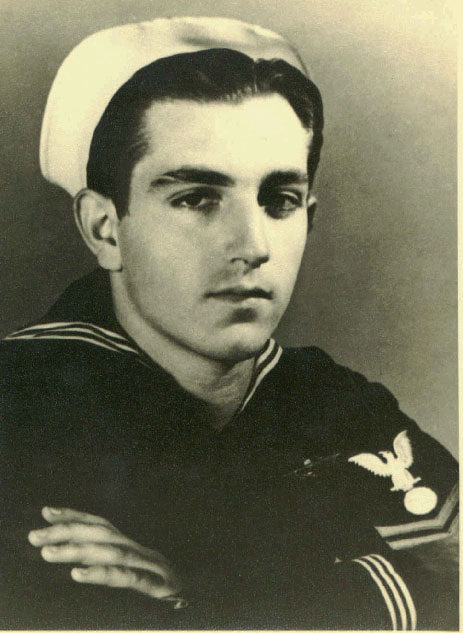
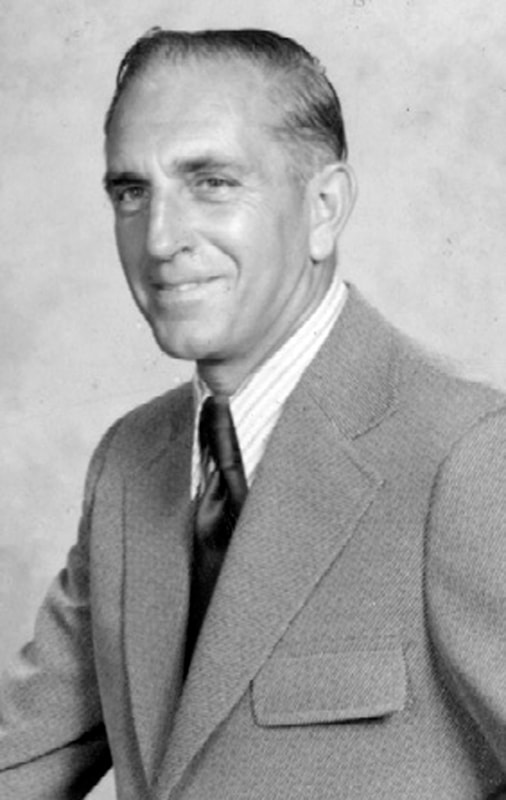
PictureNorman F McCall, US Navy 2nd Class Petty Officer (Oma Miller McCall photo)
  Norman McCall knows that "Ships Designed To Sink" (submarines) are not everyone's cup of tea, but during World War II he lived in one for three years. Not only that but Norman volunteered to join the Submarine Division of the Navy and was the only submarine veteran from Cameron Parish during World War II.
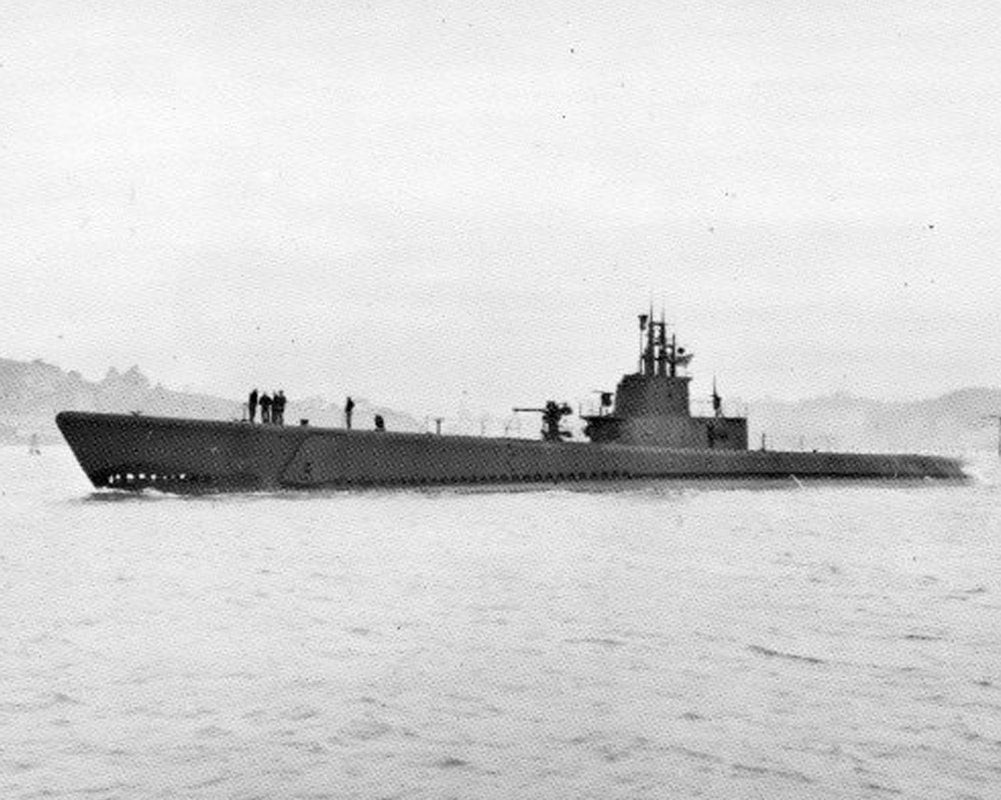
     Submarines were cramped for living spaces, sometimes hot and dark, sometimes dropped down into the deep like a rock, but when you talk to Norman McCall about living in a submarine, you®ll see a gleam in his eyes as he proudly tells about the accomplishments his submarine, The USS Jack, which sank more Japanese tankers than any other American sub with a total of 30 ships, during World War II.

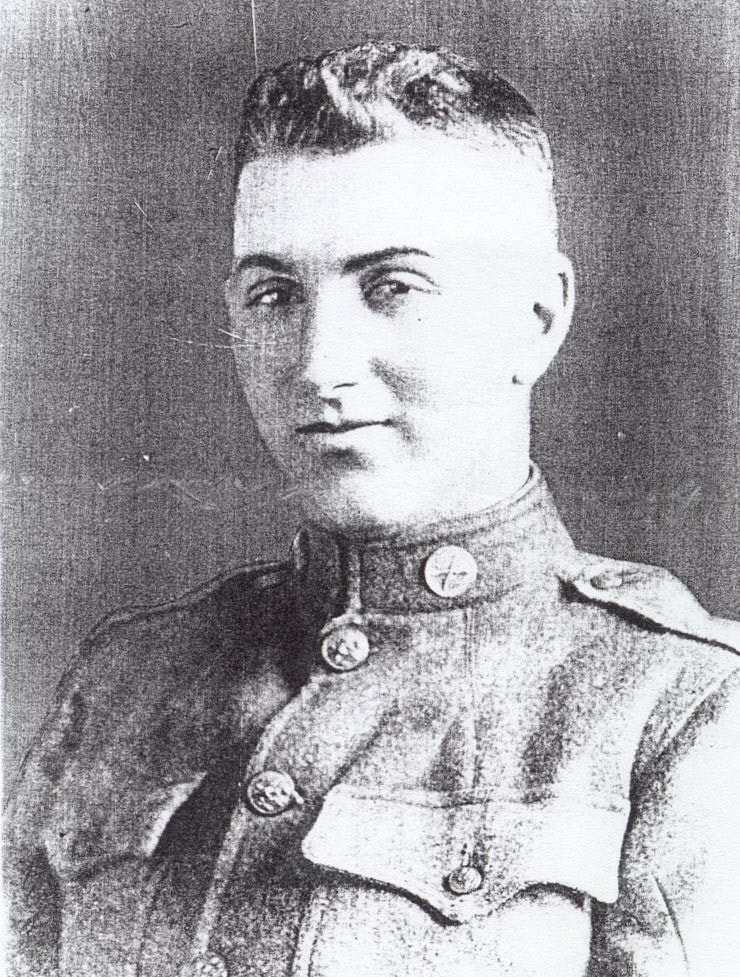
PictureHenry Albert McCall, WW I (Oma Miller McCall photo)
​EARLY DAYS IN GRAND CHENIER
     Born Mar. 2, 1924, Norman McCall, spent his childhood in a small home on the bank of the Mermentau River in Grand Chenier with his parents Henry and Gladys McCall, and siblings Claude V. "Pete" McCall, Henry "T-Boy", Emma and Oma.
     Norman still remembers two toys that he had as a child, both of them homemade, stilts, and a marsh buggy made with 2 x 4s and evaporated milk cans.
     Those were the years of The Great Depression so Norman had to help the family, including milking cows morning and evening, spending hours every week weeding the garden, and helping with any other chores he could. In between that he attended school at the tiny Grand Chenier High School,
where he graduated with 21 other students.
     Most of his early years were spent on the water, since he came from a long line of boatmen. He followed in the footsteps of his grandfather,

PictureAlcide Miller (Oma Miller McCall photo)
Alcide Miller, who operated a schooner, the E. O. Gladys, named for Miller®s wife, Emma, and his daughters, Olive, Oma and Gladys, in which he made
frequent trips to Galveston. Miller would carry passengers, oranges, and bales of cotton grown on the Cheniers to Galveston, and would bring back passengers, merchandise and supplies, for his dry goods store at Grand Chenier.
     Norman's father, Henry McCall, married Alcide®s daughter, Gladys Miller, and he operated a wooden single screw boat, 18' x 55', which
hauled supplies between Lake Arthur and Grand Chenier.

PictureGladys & Oma Miller, Abt. 1920 (Oma Miller photo)
​THEN CAME WAR
     Norman McCall was 18 years old and going to college at Louisiana Tech, when he heard about World War II. Right away he joined the Navy's Submarine Branch. He was sent to San Diego, Calif. and went through Basic Submarine Training, Electrical School, Electric Torpedo School, and Gyrocompass School, which took about six months. From the very beginning McCall was assigned to the Submarine USS Jack.
     "I didn't tell my parents that I'd joined the Navy Submarines," he said, "but having lived on the water all their lives, they probably wouldn't have been surprised."
     Most men who joined the submarines during the war liked the fact that in a submarine they would be right on the front line of the war. They could shoot torpedoes at enemy ships and see the result. This seemed much better to them than being a member of a huge crew on an air carrier, or destroyer,
which were usually too far away to witness the result of their warfare.
     "I can still remember the first time that I went down in a sub," says Norman, "and it was scary! I wasn't claustrophobic, but I knew my life depended on the entire crew of the sub. One wrong move could be catastrophic."
     "In a submarine you lose track of time and since you're underwater most of the time, you don't know which direction you're going, unless you study the instruments on the vessel".

PictureUSS Jack, SS-259 (Wikipedia.com photo)
​THE FIRST TIME
     The first day, of the first patrol, that Norman McCall went on, he faced a new life, under water, in his new home in the Submarine USS Jack, where he would live with 83 other men, for the next three years on a submarine that was 311 ft. 5 & 1/2 inches long, and 27 ft. & 1/2 inches in diameter.
     "My job description was Diesel Electrician," said McCall. "We had three shifts, four hours on and eight off. During our work time we inspected and repaired the diesel engines, the electrical equipment on the sub, and made sure the 20 torpedoes were ready to go. The torpedoes were powered by alcohol and air."
     "When we had to make a quick dive underwater," recalled McCall, "it was like riding a fast elevator, but we soon got used to it. Before we went out on patrol, hunting the enemy, our Captain was given sealed orders. He could not open them for 24 hours, so we didn't know where we were going or which Japanese convoy we were chasing, until we got to our designated position.

PictureE.O. Gladys Schooner, (Patrick Achee photo)
​PRESIDENTIAL CITATION
     "Our submarine, the USS Jack," recalls Norman, "received a °Presidential Citation of War® for our First, Third and Fifth Patrols, which were in the Pacific, East China Sea and South China Sea.
     During the First Patrol we were following a Japanese convoy of four tankers. With speedy maneuvering, and accurate torpedoes, we were able to sink three tankers, and heavily damaged the fourth. This was a major set back for the enemy."
     "The Third Patrol was memorable because we sank four tankers in 24 hours! This was in the South China Sea. It was a moonlight night and after the battle was over, our Captain surfaced and let the crew witness the tall columns of fire from the tankers, seeming to reach up to the sky."
     "The Fifth Patrol, listed on our citation took place in three different areas - South China Sea, Philippine Sea and Celebes Sea - in which we sank at least two Troop Transports carrying 3,000 soldiers preparing to invade New Guinea. We actually made six more Patrols in the Pacific and in the South China Sea. When MacArthur was getting his troops ready to return to the Philippines, we were sent to patrol the shores around Manila and sink enemy ships that were protecting it."
​
TORPEDOS, DEPTH CHARGES & BOMBS
     "Our greatest dangers were from torpedoes shot by Japanese subs, depth charges from their ships, or bombs dropped by their planes. Japan seemed to have technology as good as, and in some cases better than ours."
     "Whenever we needed repair or supplies, such as torpedoes, fuel, food, or water, we would go to Perth, Australia and stay there for a few weeks until ready to return to battle."

PictureNorman F. McCall (Oma Miller McCall photo)
​AFTER THE WAR
     Shortly after World War II ended, Norman McCall returned to Cameron and began a new life. He met Phyllis Donnateli, who was his sister, Emma's, roommate. He began dating her and they married in 1950. Soon they had two children, Doreen and Phillip Alan. But their wedded bliss ended abruptly in 1957 when Hurricane Audrey blasted ashore destroying most of the parish and taking 425 lives.
     Among the victims were Norman's wife, Phyllis, and their two children, Doreen and Phillip Alan. The tragic story of their deaths is told in my book, "Hurricane Audrey".
     After Audrey, the Bishop of Lafayette put Norman McCall in charge of the project of building a shrine in front of the Cameron Catholic Church, "Our Lady Star of the Sea". Pictures of Phyllis and daughter, Doreen, were used by the Italian sculptor as guidance for the statue of the Virgin Mary and the little girl standing beside her on the front of the church.

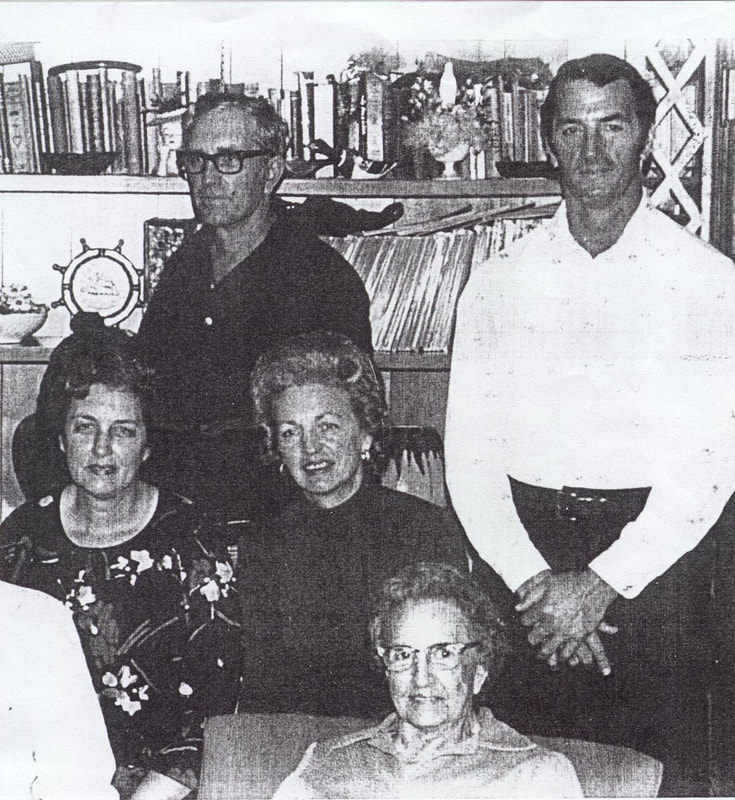
PictureSeated: Gladys Miller McCall, middle row: Oma, Emma,, standing: Norman McCall and son Henry A "T-Boy" McCall (Oma Miller McCall photo)
​BIRTH OF MCCALL'S BOAT RENTALS
     After the war Norman McCall went to work for Pure Oil Company as captain on an ex-minesweeper. When Union Oil bought Pure Oil, McCall bought a 50-foot crew boat and a 65-foot utility boat.
     In 1967 he started his own company, McCall's Boat Rentals, Inc. and gradually bought boats to build his company. While it was expanding, Norman ran for Police Jury and served one term as a juror. He also purchased a large farm in Longville and stocked it with cattle.
     As his boat business continued to expand, he built the first 4-engine crew boat in 1970, then a 5-engine crew boat in 1984, and the first 6-engine crew boat in 1989. The next year he built the first 185-foot crew boat ever delivered in the world.
     In 1996 McCall's Boat Rentals merged with Seacor Marine and now McCall boats are sent all over the world, as far away as the African Coast,  South America, Central America, Mexico, Quatar, Azerbaijan, where they support offshore oil and gas exploration and development projects.
     After his first wife's death, Norman married Joyce Colligan and they have three children, Alan, Phyllis and Joe. Norman has been, and continues to be, active in many organizations, especially the U.S. Sub-Vets of WW II, Veterans of Foreign Wars, Lions Club, Farm Bureau, American Legion and Wildlife and Fisheries. He also took up Stock Car Driving and enthusiastically pursued this hobby for a number of years.
     Since Hurricanes Rita, Gustav and Ike when he again faced destruction of his home and business, he has moved his home and business to south Lake Charles but his heart is still in the land of his birth, in Cameron Parish.

Another article on this family here.

The family book for the Michel Miller and Hiacinthe Lejeune Family, which includes this family, can be purchased at www.Lulu.com

5 Comments

African American Boutte Family - Alvin J Boutte (1929-2012)

2/28/2019

5 Comments

 
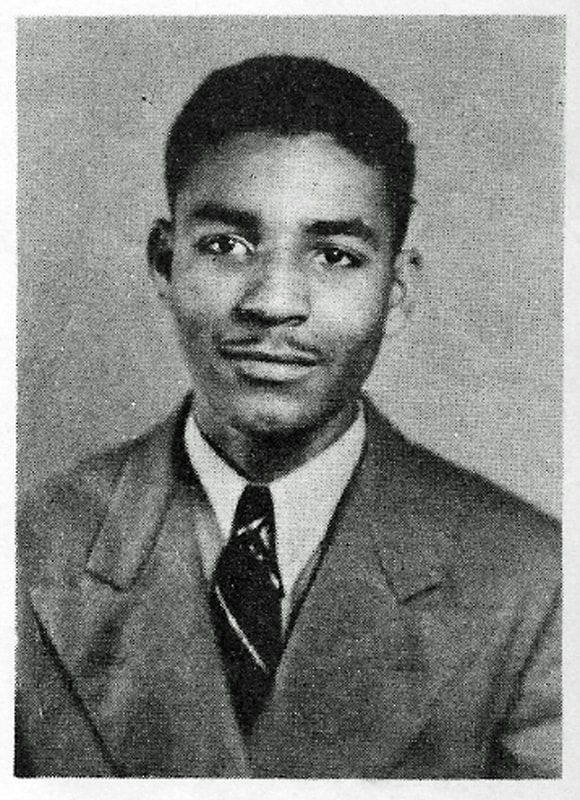
PictureAlvin J Boutte, Treasurer Sr. Class of Sacred Heart Catholic School. 1947
He is the 3rd great grandson of Andre Claude Boutte, II (1719-1792), “Claude”, and his slave Franchon (Francois) Filnotion (1732-1799). (1)  Some of his ancestry is unknown and where cited, the support is sometimes weak.  However, the birth of Eugene Pierre Barbe Boutte, son of Claude and his slave Francoise [Francon], is well supported. (2)
 
He attended, along with all his nine elder siblings, a private Catholic “Colored” school (3) even though both parents worked at low paying jobs.  With his parent’s vision and his determination, he was successful in business, his community and he was an active civil rights supporter during the 1960s Civil Rights movement. (4)

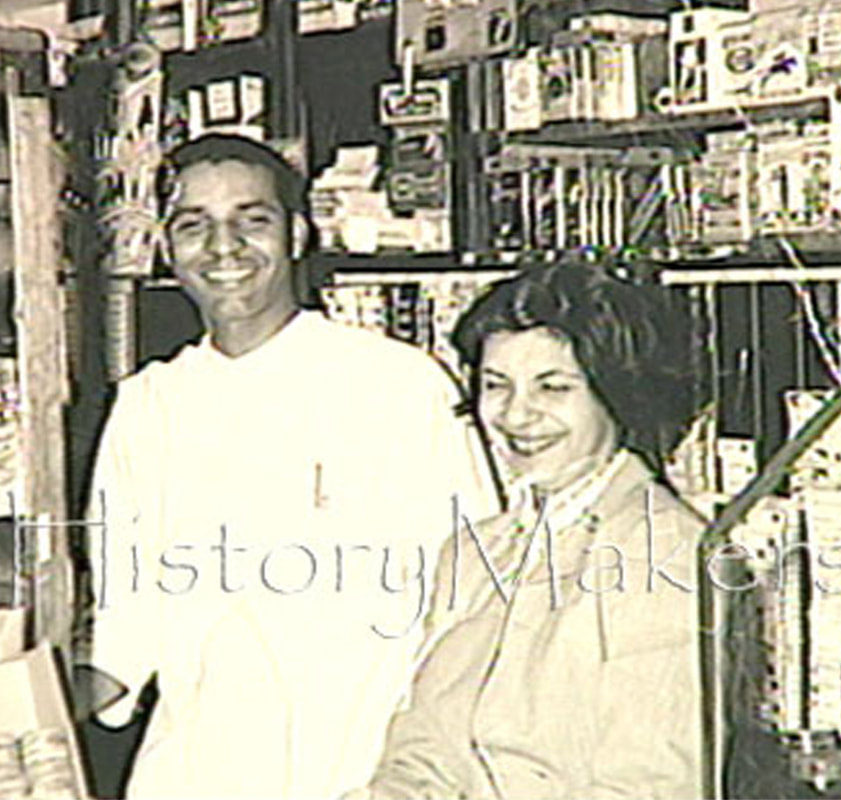
PictureAlvin J Boutte with wife Barbara in first drug store purchased. 1953-54. (TheHistoryMaker.org photo)
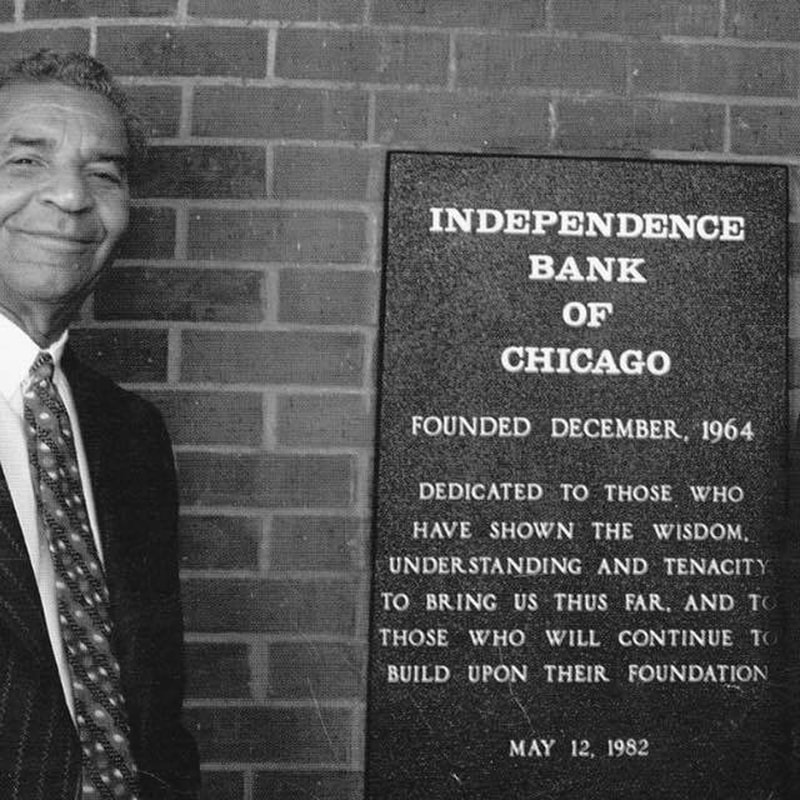
​Alvin J. Boutte, Sr. is his name.  He was “co-founder and former Chairman and CEO of Independence Bank [Chicago], the nation’s largest Black-owned bank…” The son of Arthur H. Boutte and Adorea Darensbourg, he was born on October 10, 1929 in Lake Charles, LA, and the youngest of 10 children.  All of Arthur and Adorea Boutte’s children attend Sacred Heart Catholic elementary, junior, high schools.  Alvin’s father Arthur was a gardener and his mother, Adorea, was a seamstress. (5) 

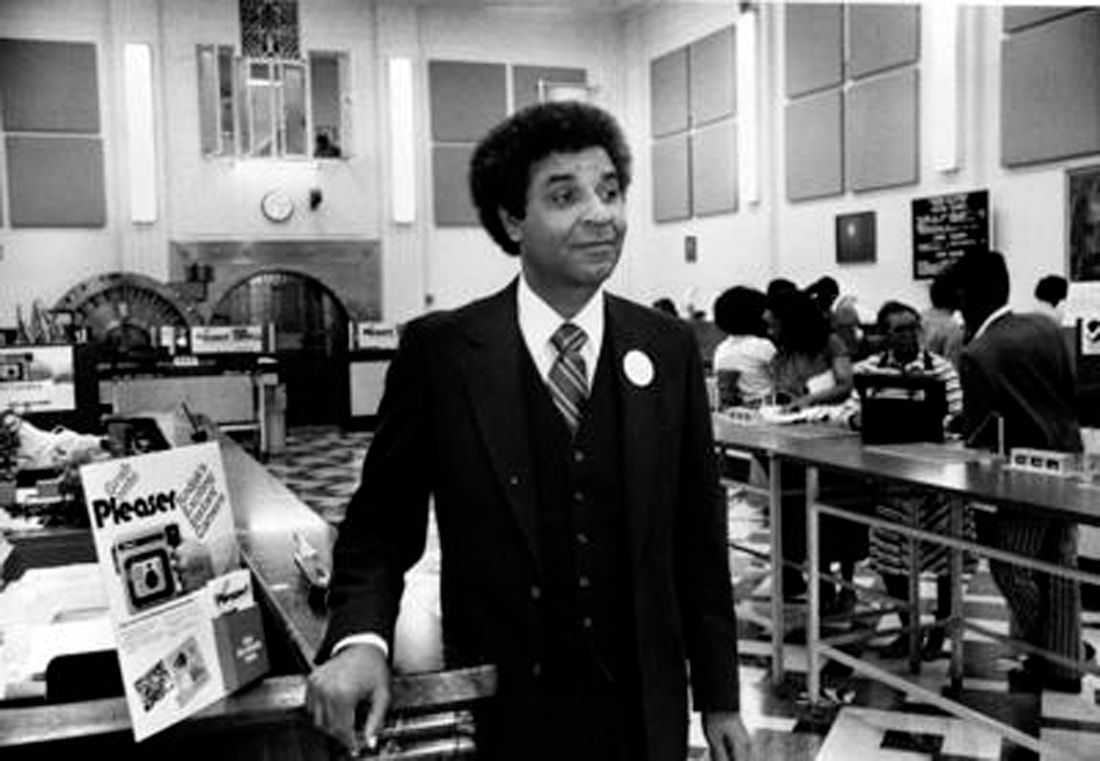
PictureAlvin J Boutte in bank. (TulsaWorld.com photo)
​Background
Andre Claude Boutte, II was the great grandson of Claude Boutte (1609-1677) and Francoise McQuennehen (1609).  The family was from France.  Upon the signing of the Treaty of Paris in 1763, Andre Claude Boutte, II brought his family to New Orleans. (6)  He served as a French military officer in Mobile, AL where he married the commandant’s daughter, Marie-Anne Francoise Bodin.  His mother-in-law, Francoise Paillet Bodin, traveled with them and it was from her that he purchased a domestic servant called Fanchon. She was born around 1732. (6A) One of the five children Andre Claude fathered with Fanchon was Eugene Pierre Barbe Boutte (1775-1832). (6B)
 
Eugene Pierre Boutte is the second child of Eugene Pierre Barbe Boutte and his wife Hyacinthe LaPorta and was born about 1796.  He married Isabelle Adelaide Olivier  in 1822.  Eugene Pierre and Adelaide had five children.  Eugene Pierre also had another child with an unknown mother named Hyacinthe Boutte. He was born in 1842. (6C)  In the 1850 census, Hyacinthe Boutte is one of the family members of Eugene Pierre and Adelaide. (6D)
 
Hyacinthe Boutte married Nellie Weber in 1873 in Edgard, LA, St John the Baptist Parish near New Orleans.  From that marriage, Arthur H. Boutte is born in 1886.  Arthur married Adorea Darensbourg.  Alvin J. Boutte is the tenth and youngest child born from this couple in 1929. (6D)

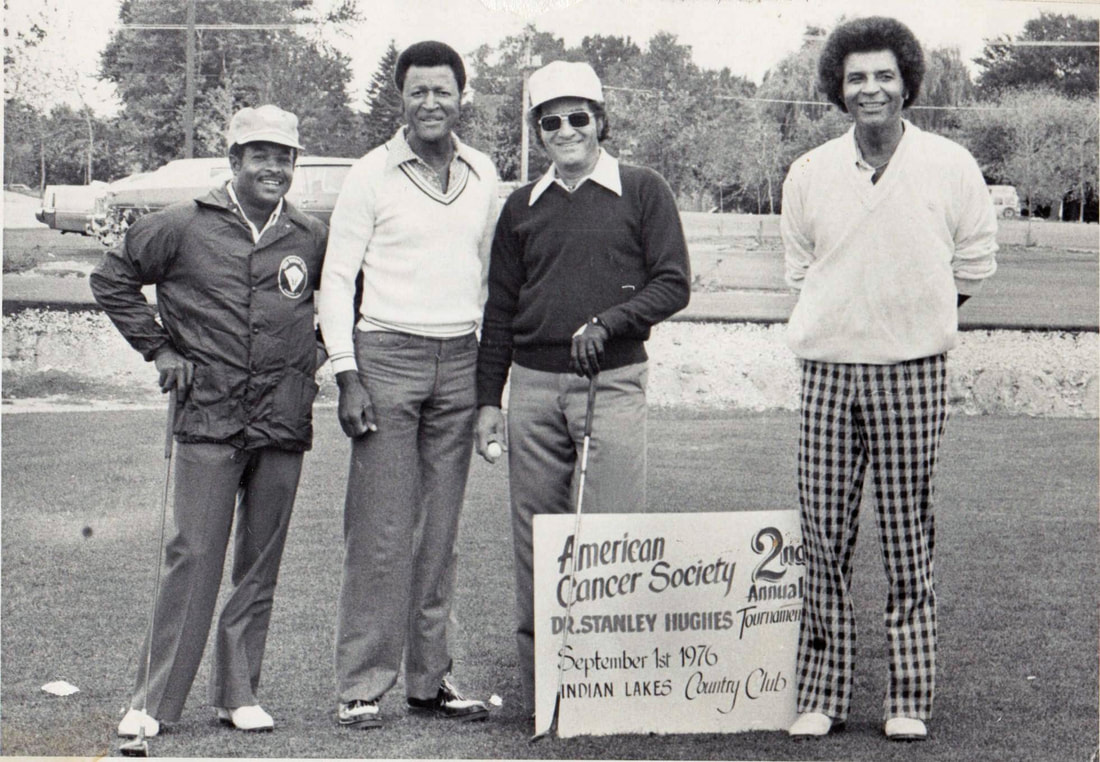
PictureAlvin J Boutte, right, in golf cancer fund raiser. 1976. (Facebook.com). The African-American community were instrumental in removing the PGA all-white professional tour status in 1961.
​Sacred Heart Catholic School
While his high school activities are not a guaranteed path to future successes, his high school participation probably contributed greatly to his lifetime achievements.
 
Alvin J. Boutte, a child of the Great Depression, graduated from Sacred Heart Catholic School in 1947. His senior year activities included President C.Y.O. (Catholic Youth Organization) ’45, Captain softball team, ’45, co-captain basketball team ’46; Corporal in R.O.T.C.; Treasurer of Senior Class; member of Patrol Squad. Hobby – gardening. (7)

​College, Military Service, Business and Community Service
He attended Xavier University in New Orleans on a basketball scholarship after completing high school.  “While at Xavier, he met his future wife, Barbara Gonzaque, who was a music major.”  While earning a Pharmacy degree in 1951, he also served the student body with a laundry pickup business and a payment collection business for male students.  After a tour in the U.S. Army, he was discharged a Captain in 1955. (8)
PictureAlvin J Boutte, CEO Independence Bank of Chicago. 1982. (Facebook.com photo)
​After completing his military service, he and wife and two daughters, Janice and Jeanette, moved to Chicago to join his mother’s family as well as former Xavier classmates who had already established themselves in their careers.  Moreover, they with former classmates, collectively had plans for the future.
 
Shortly after his Chicago move, he purchased his first drug store with a line of credit from Sealtest Dairy Corporation.  He soon had s chain of drug stores.  In 1964, Alvin J. Boutte and others established Independence Bank of Chicago.  He was proud of developing some of his staff as they became presidents of other minority banks as well as other executive positions.

​The civic-minded Boutte helped to advance the fledging Civil Rights Movement along with other Chicago African-American business leaders.  With the $55,000 raised they contributed to Rev. Dr. Martin Lughter King, Jr. and his Southern Christian Leadership Conference. (9)
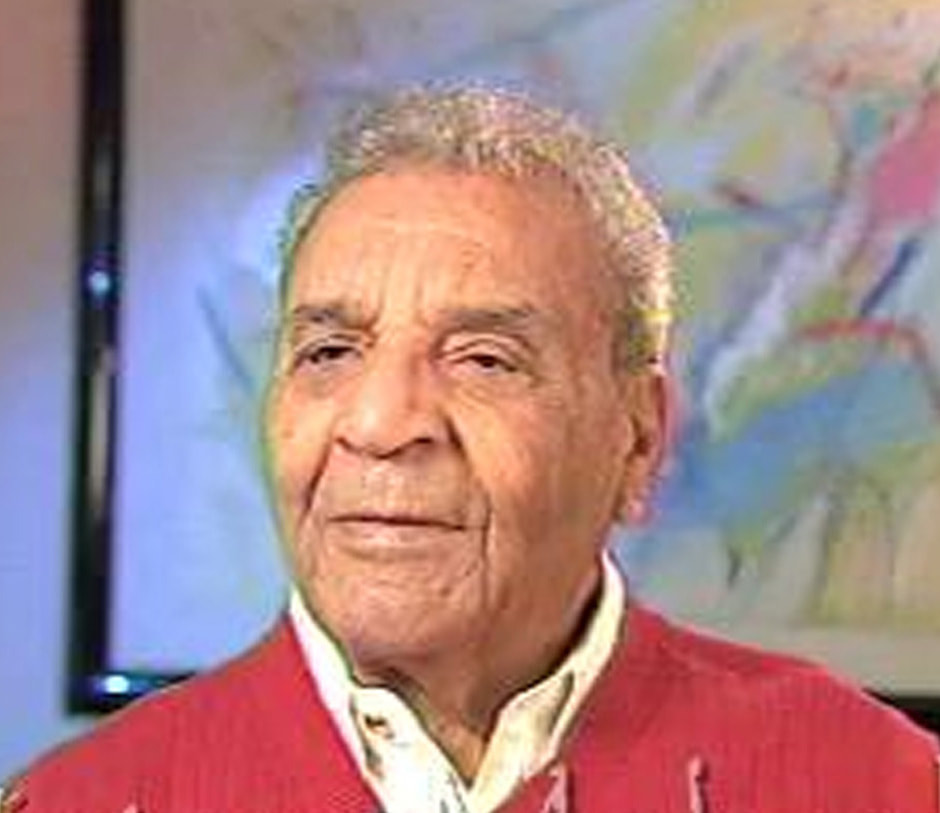
PictureAlvin Joseph Boutte (1929-2012) (TheHistoryMakers.org photo)

​“During his lifetime, Boutte served on the boards of directors for several organizations including, most notably, twenty years on the board of The Chicago Metropolitan Insurance Company.  He also served as advisor to the Small Business Administration, and was an elected member of the Chicago Board of Education.  In 1971, Boutte was honored as man of the year by the Chicago Urban League.  He was the recipient of several other honors and tributes in his later years.”
 
Alvin Boutte died at his home in Hazel Crest, Illinois on April 1, 2012. He was 82 years old. (10)

References/related information:
Facebook
Chachere African-American Family

​---------------------------------------------------------------------
(1)  Andre Claude Boutte. (n.d.). Retrieved March 23, 2019, from https://www.wikitree.com/wiki/Boutte-13. Louisiana Families Project WikiTree
(2)  Donald J. Hebert, Southwest Louisiana Records (1750-1900). CD. (Hebert Publications: Rayne, LA 70578)
​(3)  Sacred Heart Yearbook. 1947. School History, pg. 8.
https://africanamericanhighschoolsinlouisianabefore1970.com/sacred-heart-high-school-lake-charles-louisiana/
(4)  Watson, Elwood (2013, October 29). ALVIN J. BOUTTE SR. (1929-2012). Retrieved February 18, 2019, from https://www.blackpast.org/african-american-history/boutte-alvin-j-sr-1929-2012/
(5)  ibid.
(6) Wood, B. B. (n.d.). Bonnie Bess Wood's Family Tree. Retrieved March 4, 2019, from https://gw.geneanet.org/beebeewood?lang=en&n=boutte&oc=0&p=andre claude dit lalime&type=tree
(6A) WikiTree Genealogy. Fanchon NN (Slave) https://www.geni.com/people/Fanchon/6000000084431391035#/tab/overview
(6B)  Ibid. Donald J. Hebert.
(6C) Ancestry.com. Jance Boutte. https://www.ancestry.com/family-tree/person/tree/107516122/person/400059389181/facts
(6D)  Ancestry.com 1880 Federal Census.
(7)  ibid. Sacred Heart Yearbook.
(8)  ibid. Watson, Elwood (2013, October 29)
(9)  Associated Press. April 10, 2012.  Boutte to be eulogized. https://chicagodefender.com/2012/04/10/boutte-to-be-eulogized-2130/
(10)  )  ibed. Watson, Elwood (2013, October 29)

​
african_american_boutte_family_w_photos_ancestrychart.pdf
File Size: 424 kb
File Type: pdf
Download File

5 Comments

Donald Joseph Pierrotti (1937-2019)

1/31/2019

1 Comment

 
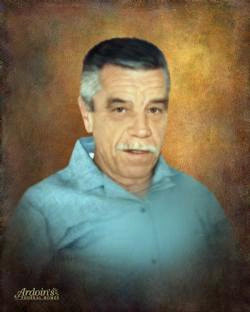
PictureDonald Joseph Pierrotti
Donald J. Pierrotti is the great grandson of the ​Constantino "Auguste Constant" Pierotti and Stephanie "Fanny" Martel. Donald's parents Marion Pierrotti, Sr. (1916-1992)  and Ethel Lebleu (1919-2011), daughter of Julin Lebleu and Evangeline Sonnier, were married in 1918.

Donald's father Marion and twin sister Mary were born in 1916, the fifth and sixth child of Constant Pierrotti and Avie Fuselier. Their siblings are Bernice (1904-1977), Virginia (1906-1994), Lula (1910-1994) and George (1912-1990)

Note: Last names spellings in this family include Pierotti, Pierrotti and Pierrottie.
--------------------Obituary----------------
​MAMOU-Funeral Services will be held at 2:00PM at Ardoin's Funeral Home in Mamou on Saturday, January 19, 2019, for Donald J. Pierrottie, 81, who passed away on Thursday, January 17, 2019 in Mamou, LA surrounded by his loved ones.

Chaplin Jeff White will conduct all funeral services.

Burial will take place in New St. Ann's Cemetery in Mamou.

Donald J. Pierrottie was born in Mamou, LA on October 25, 1937 to his parents Marion Pierrottie, Sr. and Ethel LeBleu Pierrottie. He served as a Production Foreman in the oil field for 35 years. Donald was a wonderful husband, father, and grandfather. He spent his free time with his family hunting, fishing, and camping. He enjoyed taking pictures and capturing as many special moments as he could. He also liked doing projects around the house and loved to garden. 

He leaves behind to cherish his memory his loving wife, Jane Pierrottie of Mamou, one daughter, Kimberly Pierrottie of Mamou; two sons, Kenneth Pierrottie and wife Mona of Eunice and Greg Pierrottie and wife Kim of Terral, TX; six grandchildren. Tasha Johnson and husband Travis of Vidrine, Randi Fontenot and husband Jeremy of Ville Platte, Shae Pierrottie of Vidrine, Seth Pierrottie and wife Maggie of Vidrine, Hunter Pierrottie of Terral, TX, and Kenzie Pierrottie of Mamou; seven great grandchildren, Kaitlyn Johnson, Ava Johnson, Elliana Johnson, Maddox Johnson, Gage Fontenot, Maddie Fontenot, and Rhett Pierrottie.

Donald is preceded in death by his parents, Marion Pierrottie, Sr and Ethel LeBleu Pierrottie; and son, Rusty Pierrottie.
----------------------------------------
See Also:
Pierotti - Pierrottie - Pierrotti Family & Photos
Ulysse Gabriel Pierrottie, A 33 year battle for his family's rights
Mary Pierrottie Soileau
Jane Bertrand Ortego
​
Sister Cesira Pierotti
​Louis David "L.D" Verrette Obituary
Betty Lou Deshotel Hollier Obituary
Donald Joseph Pierotti Obituary

​Books
​Pierotti - Pierrottie - Pierrotti Family & Photos
​Dominique Martel Southwest Louisiana Family

Constantino Pierotti Video


Picture
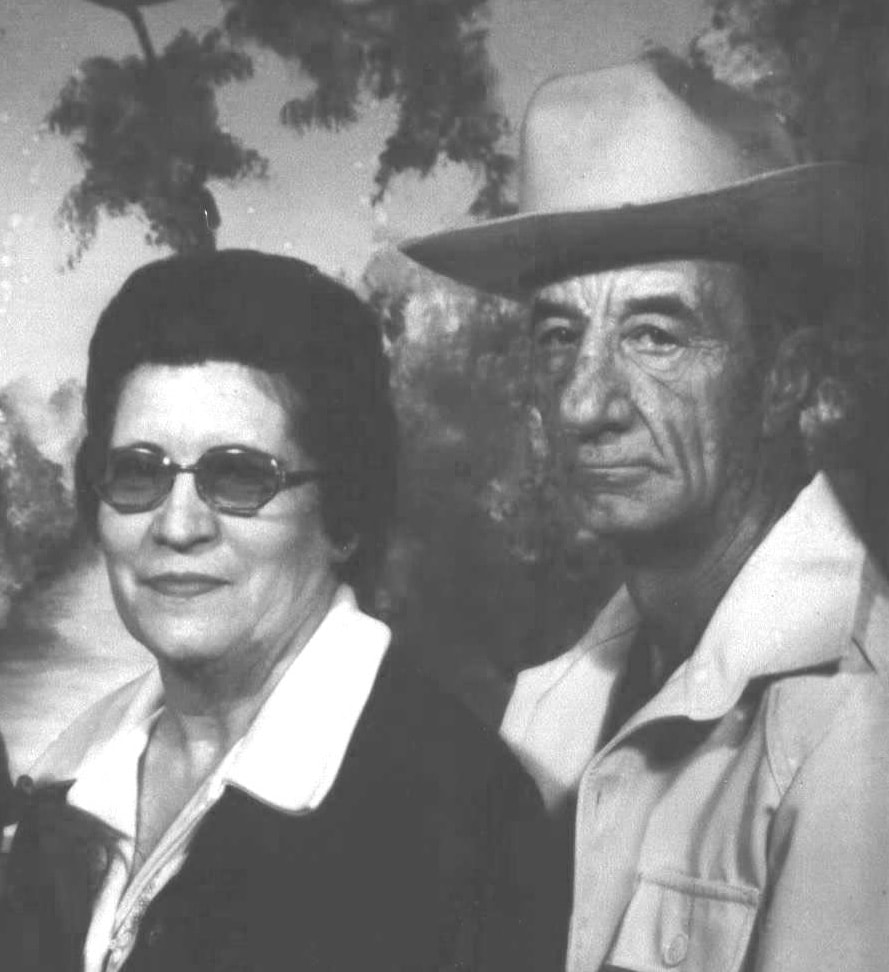
Ethel Lebleu Pierrotti and Marion Pierrotti, Sr. - Circa 1976
1 Comment

Alexandre “Alex” Miller (1938-2018)

12/16/2018

1 Comment

 
PictureAlex Miller & Audrey Castille wed January 11, 1964
​Not only was Alex and his wife Audrey Castille Miller lifelong residents of the Sunset, LA area but his father, Charles D. Miller and wife Alice Bernard, as well as was his paternal grandparents Dosite “Zick” Miller and Olivia Faul. All were residents of St. Landry Parish.
 
When you follow Alex’s grandfather’s Dosite Miller’s family line, then you find that he is the descendant of George Miller, Sr., of the United Kingdom, and his wife Catherine Ritter, of Frederic, MD.  On the other hand, if you follow his grandmother Olivia Faul’s (Fall) ancestry you find that she is a descendant of Jacob Miller and Anne Marie Thaison/Theigen of Germany.  Therefore Alex is a descendant of two early Louisiana Miller settlers.
 
Alex’s great-great grandparents are John Alexandre Alexon Miller (1853-1899) and wife Alicia Leger (1856-1938).  They were 2nd cousins. Their common ancestry is Jean “Valois” Savoye and his wife Marguerite Catherine Boutin.
 
Alexandre “Alex” Miller’s obituary follows.
 
SUNSET - Funeral services will be held Wednesday, November 21, 2018 at 10:00 a.m. in Evangeline Memorial Gardens Chapel in Carencro for Alexandre "Pop" Miller, age 80, who passed away Sunday, November 18, 2018 at Lafayette General Medical Center in Lafayette.
 
Interment will be in Evangeline Memorial Gardens in Carencro. The Rev. Gary Schexnayder will officiate at the services.
 
Mr. Miller was a native and lifelong resident of Sunset. He was a parishioner of St. Charles Borromeo Catholic Church. He was a farmer for most of his life who especially enjoyed growing vegetable. A veteran of the military, Mr. Miller proudly served his country in the United States Army during the Vietnam War. He was a member of the American Legion Post in Sunset.
 
Survivors include his devoted wife of over fifty-four years, Audrey Miller; two sons, Patrick Miller, Sr. and his wife, Cheryl, and Brian Miller and his wife, Sheila; two daughters, Andrea Carlson and her husband, Brent, and Melanie Morgan and her husband, Monty; one brother, Joseph Miller; twelve grandchildren, D.J. Kimble and his wife, Angelle, Devan Miller and his wife, Nancy, Alexis Morgan, Katelyn Morgan, Madison Morgan, Patrick Miller, Jr., Gretchen Carlson, Vivian Carlson, Dutch Carlson, Kristen Sylvester, Jennifer Dunbar and her husband, Jonathan, and Heather Gregory; and fourteen great grandchildren.
 
He was preceded in death by his parents, Charles Miller and the former Alice Bernard; and four sisters, Leverta Prejean, Emma Miller, Mildred Willingham and Anna Belle Miller.
 
A rosary will be prayed at 7:00 p.m. Tuesday in the funeral home.
 
The family requests that visiting hours be observed from 5:00 p.m. until 9:00 p.m. Tuesday and will continue from 8:00 a.m. until service time on Wednesday.
 
Pallbearers will be Patrick Miller, Sr., Brian Miller, Brent Carlson, Monty Morgan, Joseph D. Miller and Devan Miller. Honorary pallbearers will be Patrick Miller, Jr. and Dutch Carlson.
 

Purchase Jacob Miller Louisiana Family at Lulu.com
Purchase George Miller Louisiana Family at Lulu.com

Other related blogs: Three Early Louisiana Miller Settlers
Zick Miller - Two Hands On A Plow
Jack Miller's Food Products Celebrate 75 Years

milleralexandre_article.pdf
File Size: 231 kb
File Type: pdf
Download File

Picture
Alex Miller Vietnam Veteran
1 Comment

Jeanette C Singleton, Advocate for Woman’s Insurance Coverage

11/15/2018

0 Comments

 
Picture
She was an advocate for a woman’s right to insurance benefits following their husband’s retirement, death and divorce. The Louisiana law was a model for the federal COBRA law many benefit from today.(1)  Her name is Jeanette Catherine Singleton and she is the 3rd great granddaughter of Frederic Miller and Victoria Mayer. Frederic is the son of Jacob Miller and Anne Marie Thaison. Jeanette parents were John Christian Singleton and Mary Elizabeth Miller. (2)

Jeanette married Vivian Joseph Gianelloni, Jr., a native of San Francisco, CA.  “V.J.” as he was known, was a 1942 LSU graduate and a football player. During World War II he served with the 526th Armored Infantry Battalion and was the commanding officer of the security company for General Omar Bradley’s 12th Army Group headquarters from its organization in Normandy until VE Day. He received a Bronze Star and the Combat Infantryman’s Badge for his wartime service. (3)
 
Jeanette Singleton, Baton Rouge community leader, advocate for women's issues, and beloved mother, passed away on Friday, August 31, 2012. Jeanette was born in 1922 in Orange, Texas, and raised in Vinton, Louisiana. She came to Baton Rouge to attend LSU, graduating in 1942, and called Baton Rouge her home for the rest of her life.
 
Jeanette married V.J. Gianelloni, Jr., and had six children with him. Jeanette was very active in Baton Rouge community affairs. She was for many years one of the adult leaders of the Riverside 4-H Club, which was one of the leading 4-H clubs in the state. She also was for many years active with her sorority, Alpha Phi, serving as treasurer for the organization, among other roles. Jeanette was a member and president of OWL, the Older Women's League. She actively supported her husband in his service to the Capital City Kiwanis Club.
 
A breast cancer survivor, Jeanette became an advocate for insurance coverage for women who were left without insurance after their husbands retired, died, or divorced them. She lobbied in the Louisiana legislature for a state law granting insurance coverage at previous rates to such women. During that period, she was a familiar figure in the halls of the state capitol building. That Louisiana law was passed and served as a model for the COBRA law, which covers spouses in such situations on a national basis. For her role in that effort, she was selected by the Ladies' Home Journal in 1984 as one of its 50 - one from each state -- American Heroines. Ladies' Home Journal titled
 
Jeanette an "Insurance Champion" for her pioneering effort to extend insurance coverage. Jeanette also lobbied on behalf of efforts to establish respite homes for families that cared at home for handicapped individuals. In 1993 Jeanette received her Master's degree from LSU. At the time, she was 71 years old and the oldest graduate to receive a master's degree.
 
Jeanette was a talented writer, and in later years spent a lot of time writing biographical stories and items about life in rural Louisiana when she was young. An article Jeanette wrote about a trip she took to Israel was published in the Morning Advocate in 1982. She also wrote many letters and commentaries that were published in the Advocate.
 
A confirmed Christian, Jeanette and her husband V.J. Gianelloni donated the land upon which St. Jude Catholic Church was built. Later in life, she became a member of St. John's United Methodist Church. Most importantly of all, Jeanette was the devoted mother of six children. At age 11, her daughter, Marcia Lynn, called "Muffet," contracted eastern equine encephalitis, which left Muffet severely handicapped. For the next forty years, Jeanette cared for Muffet, while raising her other five children, along with helping to raise five nephews and nieces who were orphaned young. (4)
 

(1)  FindAGrave.com, Memorial # 103422110. Original source unknown.

(2)  Southwest Louisiana Records (SWLR-CD – Volume 1 (1750-1900). CD. Rev. Donald Hebert.

(3)  FindAGrave.com, Memorial # 20636327.

(4)  ​Morris, George. Date unknown. Title unknown. Baton Rouge Advocate.

(5) ​ FindAGrave.com, Memorial # 103422110. Original source unknown.

womensrightadvocate.pdf
File Size: 143 kb
File Type: pdf
Download File

0 Comments

Barthelemy Balthazar Martel, Jr (1814-1900

10/29/2018

0 Comments

 
PictureHermina Bouillet Martel & Margaret L. Martel (7)

Balthazar Martel, Jr. is the son of Barthelemy Balthazar Martel (1782-1838) and Louise Emilie Pouponne Chachere (v. 1790) and the younger brother of the well-known Civil War era Judge Barthelemy Amede Martel. His full name is Barthelemy Balthazar Martel, Jr. (1)
 
Balthazar Martel, Jr. married Hermina Bouillet, daughter of Gabriel Bouillet and Marie Antionette Pecot, in 1840. (2) They had three children, Gabrielle, Barthelemy Balthazar Martel, III and Jacques Sully Martel. Hermina died in 1906. Balthazar’s second wife was Virginia Davis. They married in 1867 and had three children; Arthur Gabriel, Marie Lyndia and Joseph Edouard. (3)

​Death of Balthazar Martel (4)
 
The Creoles [or a “descendant of the original settlers in Louisiana under the French and Spanish government…”], (5), are noted the world over for the large families that they raise. The following from the "People You Know" column of the States furnishes information in this line that is remarkable. The name is familiar in this parish and the statement will be read with interest by our people.
 
There died in Franklin, La., this week a man who should not disappear from history without a tribute being paid to his memory by the newspapers of the State. This was Hon. Balthazar Martel, aged 87 years, [actually 85 years old] (6) who enjoyed the unique distinction of having within his own immediate descendants fully 850 votes. And these votes are all in Louisiana. They are in a bunch in the St. Mary, St. Landry and St. Martin section of the country, and they are all creoles."
 
Mr. Martel, who has just died at the ripe old age of four score and seven, comes from one of the most ancient and distinguished of Louisiana families, reknowned [renowned] for its eminent services in peace and in war. His brother, Judge B.A. Martel, was a hero of the Attakapas region, and served for many years as judge of the St. Landry district when that region stretched from the prairies of Opelousas to the Texas State line, which, by the way, was then Mexico.
 
The son of the old patriarch who died is Judge J. Sully Martel, one of the most prominent attorneys of St. Mary parish.
 
_______________
(1)  Southwest Louisiana Records (1750 – 1900). CD. Rev. Donald J. Hebert. Hebert Publications. P.O. Box 147, Rayne, LA 70578.
 
(2) Kim Mohler, Biographical and Historical Memoirs of Louisiana (Chicago, Illinois. The Goodspeed Publishing Company, 1892)
 
(3) Southwest Louisiana Records (1750 – 1900)
 
(4) Le Courrier des Opelousas (newspaper), February 17, 1900
 
(5)  Settlement of the German Coast of Louisiana, by Hanno Deiler, Genealogical Publishing Co., Inc., Baltimore, 1975, page 111.
 
(6) FindAGrave.com. Headstone states birth year 1813.
 
(7) Ancestry.com. Martel-Blackburn family. J. S. Martel, Jr.
-----------------------------------------
Purchase Martel Family book.

balthazarmartel_article.pdf
File Size: 105 kb
File Type: pdf
Download File

0 Comments

THE LATE JUDGE B. A. MARTEL of St. Martinsville, La. (The Times-Picayune, New Orleans, LA, October 19, 1887)

9/23/2018

0 Comments

 
PictureBarthelemy Amede[e] Martel (1819-1887)
The subject of this sketch, the Hon. B. A. Martel, whose death was announced on the 5th inst., [abbreviation for instante mense meaning date of the current month] was born in the parish of St. Martin in this state on the 8th of March, 1819. His father Balthazar Martel, was a Creole of St. Domingo, and was one of the few gallant and brave men who escaped from that unhappy island during the revolution provoked by Toussant L'Ouverture (1), Desaline, Ringo and others. Balthazar Martel was then a young man and settled in the Attakapas, where he married Miss Emilie [Catherine Eleonor Chachere], daughter of Louis Chachere [Beaurepaire Prosper Chachere & Eugenie Alexandrine Lavergne] of St. Landry. Of this marriage there were six children. B. A. Martel being the fourth. In 1831 the family moved from St. Martinville to St. Landry, where the father of young Martel died of yellow fever in 1850. [Death year was difficult to read. Murphy Miller research supports death on January 12, 1838. Moreover, B. A. Martel was the fifth of nine children].
 
Young Amedee, although not the oldest son, took upon himself the care of his mother and three sisters; and in doing this the noble youth toiled with a perseverance and determination that outlined his future career. By various kinds of labor and skill he soon succeeded in placing his mother and sisters in a condition of comparative ease and he applied himself to the study of the civil law. For some time he was the pupil and protégé of the celebrated Gustave Schmidt of the New Orleans bar. Martel was admitted to practice in New Orleans and such was his desire to perfect himself in the knowledge of his profession that he sailed for France where he prosecuted his studies in the University of Toulouse until 1849. He then returned to his native home.
 
Being in France during the revolution of 1848, he learned much from the scenes enacted in his presence and he soon became familiar with the national character of the French people. This knowledge served him usefully on many trying occasions in after life. Having established himself at Opelousas soon after his return, he began the practice of his profession in earnest and was very successful, although he often met with unexpected opposition from some of the older members of that bar. But when these gentlemen thoroughly understood the ardor and warmth of his generous nature they regretted their former conduct toward him and even afterward became his personal friends. His industry and close application to business soon grained for him very many friends, and in 1854 he was elected to the state senate where he served with distinction until 1856. He was then elected judge of the Fifteenth judicial district, which comprised the territory of St. Landry, Lafayette, Vermillion, Calcasieu, Cameron and Acadia. Nowhere in the history of the profession is found a judge more determined to enforce the duties of his office.
 
The following proclamation will exemplify this assertion:
"The Laws of the Country must be sustained. Law-abiding Citizens of Calcasieu: I am in possession of reliable information that threats have been made and are in circulation, that the approaching term of your district court on next Monday is to be arrested by violence against your district judge on his way to Lake Charles."
 
"Now, therefore, this is to call on you to revindicate your rights and to stand by the laws and the officers whose duty it is to administer them. Let it be proclaimed at once by all the good people of your parish from your domestic roots to the sanctuary of your courthouse, that the law shall and must prevail from this time forward though the heavens fall."
 
"As to me, I know that I shall do my duty at all hazards."
"B. A. Martel,"
"Judge Fifteenth Judicial District"
"July 5 1859" [difficult to read date]
 
In the discharge of his duties he feared no man. The terror of Calcasieu and the outlaws of that epoch felt his power and were by him made to succumb and to respect the laws of Louisiana like other men. It is proverbial and it is a matter of fact, that his decisions as judge have never been disturbed by the supreme court except in two or three instances, and then only by modification. He held the judicial helm until the outbreak of the war.
 
In the strife for succession, Judge Martel took no part, except to prove by demonstrative argument the folly and danger of such a step and the terrible vicissitudes that would necessarily follow such political imprudence. Although a strong unionist he loved his native south, and especially his own Louisiana. He loved it too well to stand idly by and see the helpless wives, mothers, sisters and daughters of the brave fellows who were far, far away battling for their homes, insulted and plundered by the rabble jayhawkers of the Attakapas. He at once placed himself at the head of his company of sturdy reserves and in a very short while the country was rid of the last Jawhawker, and the homes of the helpless were no longer terrorized. Having taken up the sword he laid it aside only when the trumpet of peace declared that the struggle was over.
 
He now resumed his practice with wonderful success and won very many cases, both civil and criminal, which the entire bar considered absolutely hopeless. Remembering his earlier days and the kindness received at the hands of the New Orleans bar, especially his protector, Hon. Gustave Schmidt, Martel took under his care Pecora, who was in due time admitted to practice law. Pecora soon laid by his "cat skin" and is now famous among the detectives of New Orleans. He next took into his office a youth name Linny Hardy, who became one of the brightest lights of the profession. Hardy was, while a law partner of Judge Martel, elected secretary of state. The late judge of the Thirteenth district, Geo. W. Hudspeth, was another youth cared for by him. When Hudspeth took the bench about eight years ago, Judge Martel's last case, a few months ago, was an indictment for murder made against two brothers. They were acquitted.
 
Whilst the family resided at St. Martins young Martel had among his dearest playmates Alcibiades De Blanc (2), Edward Simon, Desaline and Mozart Bryant and Valisin Fournette, all of whom he loved tenderly all his life. Whilst very ill and up to the day of his death, he spoke in the kindest terms, with great emotion and often with tears of the many virtues of his old and tried friend, General Alcibiades De Blanc. During his last illness Judge Martel was kindly visited by Ex-Governor Nicholls. Generals Robert Perry (3), Allen Thomas (4) and all the members of the Opelousas bar, all of whom he was most happy to see. Having afterwards learned that Governor Nicholls spoke of him in connection with General Alcibiades De Blanc, he raised his hand to his brow to cover the emotion and said, "It makes me very happy to know that Governor Nicholis has been so kind as to associate m name with that of such a great and good man."
 
During the whole of Judge Martel's life he was noted for his firm adhesion to the principles of the Democratic party. Whenever he led his party he was sure of success.
 
Being a noted leader he despised anything like double-faced Democracy. Brave and fearless in politics as in manhood, he loved plain sailing, honesty of purpose being his unerring compass. His political coat was never turned, but in the hour of need was always pulled off for the honest fray. The Democracy of St. Landry can well mourn the loss of a Martel.
 
Being poor in his youth his heart warmed to those whose days began as his days did and his office, his home and his purse were ever open to them. Indeed, he lived to see many rich fruits of his generosity. To the widow and the orphan Judge Martel was ever known to render relief and fatherly protection. In all matters of charity, he was exemplary.
 
He was singularly remarkable for his love of children. His great delight was in pleasing them whenever he could. He was known to spend many dollars in taking them to all kinds of places of amusement. On Mardi Gras and at Christmas he was the idol of the little ones. This, as well as his other virtues, gained love, affection and esteem, all of which was clearly shown at his burial. His last breath bid love and devotion to all his friends and acquaintances.
 
Purchase Martel Family of Louisiana. See Lulu.com also.
------------------
Murphy Miller Comment.
Judge B. A. Martel was a Unionist, i.e. not a Confederate sympathizer, yet the people mentioned as his close friends were Jean Maximilien Alcibiades Derneville DeBlanc, Allen Thomas and Judge Robert Samuel Perry, Jr. all who served in the Confederate Army.
------------------
The following from Wikipedia.com and FindAGrave.com
(1) Toussaint L'Ouverture, Toussaint-Louverture, Toussaint Bréda, and nicknamed the "Napoléon Noir" (Black Napoleon), was the leader of the Haitian Revolution. His military genius and political acumen transformed an entire society of slaves into the independent state of Haiti.  The success of the Haitian Revolution shook the institution of slavery throughout the New World.
 
Toussaint Louverture began his military career as a leader of the 1791 slave rebellion in the French colony of Saint-Domingue; he was by then a free black man. Initially allied with the Spaniards of neighboring Santo Domingo, Toussaint switched allegiance to the French when they abolished slavery. He gradually established control over the whole island and used political and military tactics to gain dominance over his rivals. Throughout his years in power, he worked to improve the economy and security of Saint-Domingue. He restored the plantation system using paid labour, negotiated trade treaties with Britain and the United States, and maintained a large and well-disciplined army.
 
In 1801 he promulgated an autonomist constitution for the colony, with himself as governor for life. In 1802 he was forced to resign by forces sent by Napoleon Bonaparte to restore French authority in the former colony. He was deported to France, where he died in 1803. The Haitian Revolution continued under his lieutenant, Jean-Jacques Dessalines, who declared independence in early 1804. The French had lost two-thirds of forces sent to the island in an attempt to suppress the revolution; most died of yellow fever.
 
 (2) Jean Maximilien Alcibiades Derneville DeBlanc (September 16, 1821- November 8, 1883) was a lawyer and state legislator in Louisiana. He served as a colonel for the Confederate army during the American Civil War. Afterward, he founded the Knights of the White Camellia, a white insurgent militia that operated from 1867-69 to suppress freedmen's voting, disrupt Republican Party political organizing and try to regain political control of the state government in the 1868 election. A Congressional investigation overturned 1868 election results in Louisiana.
 
But DeBlanc continued to oppose the Reconstruction effort; he was influential in commanding 600 men to oppose the disputed election of Governor William Pitt Kellogg in 1874 and try to seat the Democrats. He was briefly arrested and held by U.S. Marshals. In 1876 he was appointed by Democratic governor
 
(3) Robert Samuel Perry (Jr.) was the son of Robert Samuel Perry and Ezemily Booth. In 1870 (in St. Martinsville, LA) he married Marie Antionette "Bertha" Gary (1848 -1878). She was the daughter of Pierre Gary and Helene Briant. Her family lived in St. Martinsville, LA, so it's likely she was buried there. Robert and Bertha were the parents of three children: Bertha, Lelia (who married Eugene Martinez) and Joseph Robert.
 
Robert received the best education the schools of Louisiana afforded, and subsequently graduated from Kentucky Military Institute, at the age of 19 years. After completing his literary education, he entered the law school at the University of Louisville, where he took a course of lectures, and afterward entered a law office in Anderson, TX, where he pursued the study of law for about a year. He never practiced there, however, and returned shortly afterward to Vermilion Parish, where he remained until the Civil War broke out.
 
Robert enlisted as a private in Company C, of the Eighth Louisiana Regiment, and in August of that year was made first lieutenant. He served during the whole war in the Army of Northern Virginia. Nov. 7, 1863, he was captured at Rappahannock, and held prisoner at Johnson Island for nineteen months, where he was at the close of the war.
 
In 1866, he moved to St. Martin Parish and then to Iberia in 1871. In 1879 he was elected a member of the State Senate, and served until 1884. He introduced the first bill providing for the regulation of railroads in Louisiana. In 1888 he was elected by the Legislature Judge of the court of Appeals of the Third Circuit of Louisiana.
 
After his wife Bertha died, he remarried Camille Vedrines of New Iberia on Jan. 1, 1883. Camille died the following October. The Confederate Museum at Lee Circle in New Orleans has a daguerreotype portrait of Robert in uniform.
 
Judge Perry entered the Confederate army in 1861 as adjutant of the 8th La. Regt., and served with marked distinction throughout the war, in which the Louisiana brigade took a most active part in Virginia where they formed a part of Stonewall Jackson's "foot cavalry" under the immortal Lee, in the famous Valley campaign.
 
(4) Allen Thomas (December 14, 1830 - December 3, 1907) was a Confederate States Army brigadier general during the American Civil War (Civil War). He was born in Howard County, Maryland and became a lawyer but he moved to Louisiana in the later 1850s and became a planter and colonel in the Louisiana militia. After the war, he was a planter, Presidential elector in 1872 and 1880, professor of agriculture at Louisiana State University and coiner at the United States Mint at New Orleans, Louisiana. He moved to Florida in 1889. Between 1894 and 1897, he was United States Minister to Venezuela. He moved to Mississippi in 1907 and died there in that year. He was buried at Donaldsonville, Louisiana.

Another Martel blog.
See additional information on B.A. Martel and his children from his slave and
mixed race offspring in Chachere family.

Purchase Martel Family of Louisiana.
​Purchase Chachere Family book.

martelbarthelemi_judgearticle.pdf
File Size: 136 kb
File Type: pdf
Download File

0 Comments

Pierrottie / Pierotti Family History Thanks to Sr. Cesira & Reno Pierotti

8/29/2018

3 Comments


The Louisiana Pierrottie families Italian roots were revealed through the efforts of Sr. Cesire and her brother Reno. They provided contact information that allowed me to document the Pierotti ancestors to the 1400s.  Additionally they provided family contacts which led to family history on Constantino's brother's family along with invaluable pictures. 

A brief video explains more about the family history:
​https://www.youtube.com/watch?v=gCYmUk2MRIg

Pierotti - Pierrottie - Pierrotti Family & Photos
Ulysse Gabriel Pierrottie, A 33 year battle for his family's rights
Mary Pierrottie Soileau
Jane Bertrand Ortego
​
Sister Cesira Pierotti
Balthazar Pierotti
​Louis David "L.D" Verrette Obituary
Betty Lou Deshotel Hollier Obituary
Donald Joseph Pierotti Obituary
3 Comments

Jennings man, a B-17 gunner, shot down twice during World War II By Doris Maricle / American Press (date unknown)

7/29/2018

0 Comments

 
PictureBen reviewing his WW II memories
JENNINGS - Imagine rolling yourself into a ball, like an armadillo, and squeezing yourself into a space barely big enough to hold your contorted body.
Now imagine that you will be stuck inside this little claustrophobic ball for eight hours at a time, breathing oxygen through a mask to stay alive and controlling two .50-caliber machine guns, all while flying over enemy-held territory at 29,000 feet, where the outside temperature is 60 degrees below zero.
 
Retired Staff Sgt. Ben Miller, 88, of Jennings, did this 33 times as an 18-year-old ball turret gunner on an Army Air Force B-17 Flying Fortress in the skies over Europe during World War II.
Drafted at the age of 18 in 1943 from his home in Jennings, Miller was shipped off to Logan, Utah, as a cadet for pilot training.
 
Slated to be shipped to California to finish his pilot training, the program was cut and Miller was not able to solo and gain his pilot wings. He was transferred to gunnery school and was trained to shoot down enemy fighters with the .50-caliber machine guns that gave the Flying Fortress its name. The mounting casualties in the air war over Europe forced the Army Air Force to ship Miller to England to man the ball turret on a B-17.
 
He sailed from New York to England aboard the Queen Mary, along with actor Mickey Rooney. “I saw Mickey Rooney on the deck of the ship, but I never got to talk to him,”  Miller said.
 
The Atlantic crossing was dangerous in itself, with many soldiers never making it to England. “It took us nine days to cross because we had to zigzag to avoid the German submarines,” he said. “I was flying combat missions for the 8th Air Force just a few days after landing in England,” he said.
 
On Dec. 11, 1944, Miller flew in the bombing raid on a major railroad complex in Giessen, Germany. The railroad facility was a key strategic target because it handled the transportation of vast amounts of German army resources. The city also was the location for the subcamp of the Buchenwald concentration camp.
 
Enemy fire wasn’t the only threat to Miller’s survival. Stuffed into his tiny ball turret gun position in the belly of the B-17, Miller’s oxygen mask froze up and cut off his air supply at 29,000 feet. He had to scramble to take off his oxygen mask, disconnect his heated gloves and jacket from their electrical connections, and open the door to the turret so that he could climb back into the aircraft with his other crew members before passing out from hypoxia.
 
"I thought that was my last day on Earth, but I came through and here I am today," he said. His buddies on board were able to get an emergency oxygen tank to him.
 
Life in the ball turret on a B-17 was especially dangerous. Only small-statured men could fit into the cramped space. “I flew the first five missions without a parachute because they didn’t have a chute small enough to fit with me inside that little frozen ball,” he said with a smile.
 
Enemy fire caught up with Miller and his crew on Christmas Eve 1944. “The first time I was shot down, we were hit over Frankfurt, Germany, and ended up crash landing in Belgium.” Miller said.
 
Miller had to climb out of his ball turret before they crash landed because he would have been crushed inside the bottom of the plane.        "We had to scatter and make our way back to England on our own because the Germans were all around," Miller said.
 
The B-17 had a 10-man crew, and it was every man for himself to get out of enemy-held territory because 10 American soldiers in a group would attract the attention of the enemy.
 
Miller’s luck continued as he was approached by a young boy as he made his escape from the crash site. “I couldn’t understand a word he was saying, but I could tell he wanted me to follow him to his home,” Miller said.
 
When they arrived at the boy’s home, he showed Miller identification papers and a pistol given to him by the U.S. government that proved he was a member of the underground resistance and would help Miller get back to his base in England.
 
After spending Christmas with the boy’s family, Miller rejoined an engineering outfit that had seized a castle previously occupied by the Germans. Miller stayed with the engineers for nine days before being transported back to his base in England.
​
He immediately returned to duty and began flying more bombing missions. On Valentine’s Day 1945 while on a bombing raid to destroy the oil refinery and weapons factory at Chemnitz, Germany, he was shot down for the second time.

"We got hit real bad," he said. “The flak (air-bursting anti-aircraft artillery) blasted us. Two of our engines were hit and caught fire. One of my buddies caught a load of shrapnel in his leg and was banged up real bad. The shrapnel that tore his leg up barely missed me.
 
"We landed with two of our engines on fire." Having landed on the allied side of the lines, Miller and his crew were back in England on flight status in no time.
 
When asked what was the scariest part of the missions, Miller replied, "The flak exploding and spraying us with shrapnel. The flak was so close and rough that by the time we hit Belgium our formations were all busted up and scattered. The booming noise as the shells exploded was unbearable."
 
          With victory declared in Europe, Miller waited for his orders to ship him to the Pacific to fight the Japanese. Fortunately for him the war in the Pacific ended before he received his orders to go.
 
"Boy was I relieved when we got word of the Japanese surrender," he said.
 
Miller left England for Iceland, and then to Mississippi to await his next assignment before becoming an inactive reservist. He was later called up for the Korean War but was never deployed. He ended his military service in 1952 as a vehicle technician at Keesler Air Force Base in Biloxi, Miss.
 
Miller’s wife of 59 years, Martha, was just a young girl while he was serving his country. “I was only 9 years old when he was over there fighting,” she said. "All I remember about the war was working at my daddy’s gas station and pasting stamps in the stamp books."
 
Miller kept a diary of his days in combat. "I just wrote in it when I thought about it," he said. "There would be days I didn’t pay any attention to it." The diary is among other keepsakes from his service including his medals, letters from home and old black and white photographs.

------------------------------------------------NOTES------------------------------ 
Ben Miller is a descendant of Jacob Miller and Anne Marie Thaison/Theigen and Jacob’s son, Jean Miller and Marie Francoise Mayer.
 
Ben’s parents are Bernard Miller and Anna Marie Clement. He married Martha Blackledge.
 
More on these families at www.FamilyAtLouisiana.com. Books of interest may be purchased at www.lulu.com. 
​

Picture
Ben, now and back in WW II
Picture
Anna Marie Clement weds Bernard "Ben" Miller, mother and father of Benjamin "Ben" Franklin Miller


​Download your copy of this blog below.

jennings_man.pdf
File Size: 249 kb
File Type: pdf
Download File

Purchase Jean Miller Louisiana Family book, Vol I
and Vol II

​
0 Comments
<<Previous
Forward>>
    Picture

    Author

    Murphy Miller, born in Durald, LA in 1943, and lives near Gainesville, FL.

    Archives

    March 2024
    November 2023
    October 2023
    November 2022
    September 2022
    June 2022
    May 2022
    April 2022
    February 2022
    September 2021
    August 2021
    July 2021
    June 2021
    May 2021
    February 2021
    January 2021
    December 2020
    November 2020
    October 2020
    September 2020
    August 2020
    July 2020
    June 2020
    May 2020
    April 2020
    March 2020
    February 2020
    December 2019
    November 2019
    October 2019
    September 2019
    August 2019
    July 2019
    June 2019
    May 2019
    April 2019
    March 2019
    February 2019
    January 2019
    December 2018
    November 2018
    October 2018
    September 2018
    August 2018
    July 2018
    June 2018
    May 2018
    March 2018
    February 2018
    January 2018
    November 2017
    September 2017
    August 2017
    April 2017
    February 2017
    January 2017
    December 2016
    November 2016
    October 2016
    September 2016
    February 2016
    January 2016
    May 2015
    January 2014
    December 2013
    November 2013
    October 2013
    September 2013
    August 2013
    July 2013
    June 2013
    May 2013
    April 2013
    March 2013
    February 2013
    January 2013

    Categories

    All
    African American
    Antoine Miller Family
    Basile LA
    Baton Rouge
    Bergeron Family
    Books
    Boutte
    Cameron Parish
    Catherine Adam
    Cementery
    Chachere
    Civil War
    Coonass
    Deshotel(s)
    Download Your File
    Duplechian
    Eunice
    Evangeline Parish
    Fontenot Family
    Frederic Miller
    Genealogy & Family Book Types
    George Miller Family
    Jacob Jackson Miller
    Jacob Miller Family
    Jacob Miller Jr
    James Gallier
    Jay Hawkers
    Jean Baptisted Gus Miller
    Jean LaFitte
    Jean Louis Miller
    Jean Miller_Boutin
    Jean Miller_Mayer
    Jennings
    Jr.
    LA
    LaHaye
    Lake Charles
    LeDoux
    Mamou LA
    Martel Family
    Mary Francis Miller
    McCall Family
    McCauley Family
    McGee
    Michel Miller Family
    Musician
    Obituary
    Ortego Family
    Ory Family
    Pettifield & Upchurch Family
    Pierre Valcour Miller
    Pierrottie_Pierotti
    Relationships
    Richard
    Ritter
    Savoy_Savoie
    Sonnier
    Veterans
    Ville Platte LA
    World War I
    World War II

    RSS Feed